
· Adrian Costa
Pink toe tarantula enclosure: height, ventilation and a sample setup
The pink toe is one of the most popular first arboreal tarantulas, and for good reason. It is striking, active, and fascinating to watch build silk retreats up high. But it is also the species new keepers most often house incorrectly, usually by putting it in a wide, short enclosure meant for a ground-dweller, or by sealing it into a humid tub with poor airflow. This guide covers what makes an Avicularia enclosure right, why height and ventilation matter so much, and a sample setup you can copy.
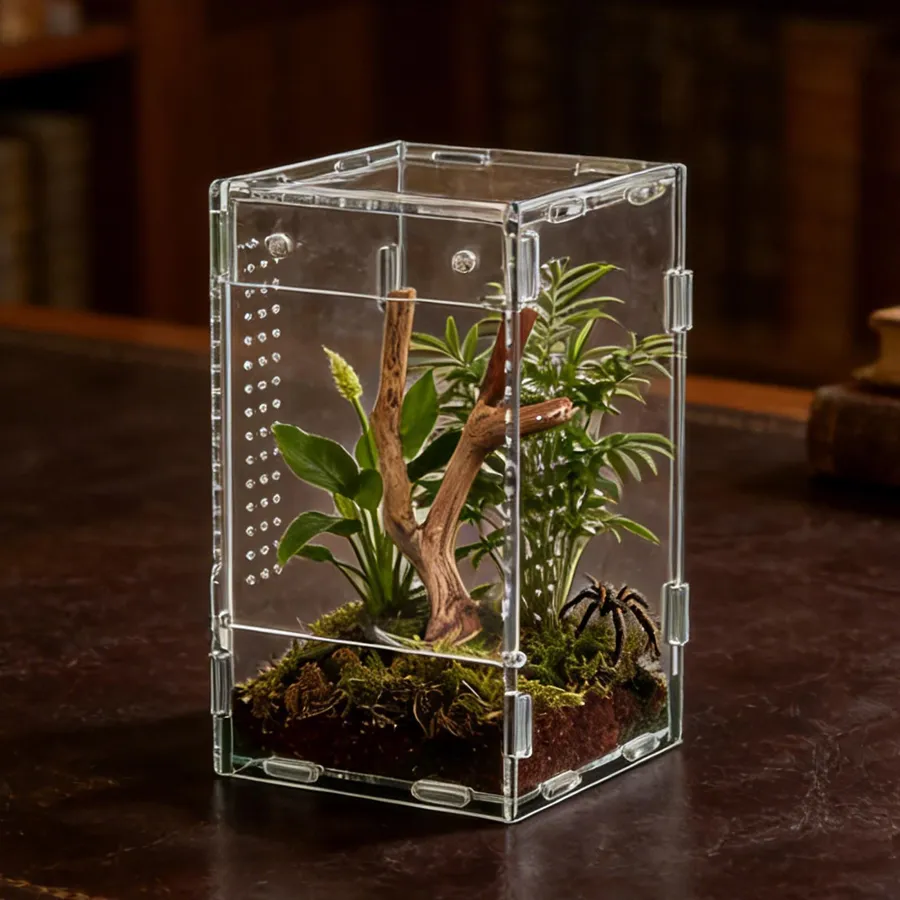
An arboreal spider, not a ground-dweller
Pink toes belong to the genus Avicularia, a group of New World arboreal tarantulas native to the forests of Central and South America. Arboreal means tree-dwelling. In the wild these spiders live off the ground, anchoring silk retreats in bark crevices and among leaves, and they hunt and rest up high rather than down in a burrow. Everything about their enclosure should respect that.
This is the single most important fact to get right, because it flips the usual advice. Where a ground-dwelling species wants a wide floor and deep substrate, an arboreal wants the opposite: height, climbing surfaces, and only a thin layer of substrate at the bottom. If you have kept a terrestrial before, unlearn the wide-and-low habit here. The general split between the two lifestyles is covered in arboreal vs terrestrial, and it is the backbone of getting a pink toe enclosure right.
described tarantula species, of which the arboreal ones like Avicularia need a very different enclosure shape
— World Spider Catalog, 2024
Why height matters
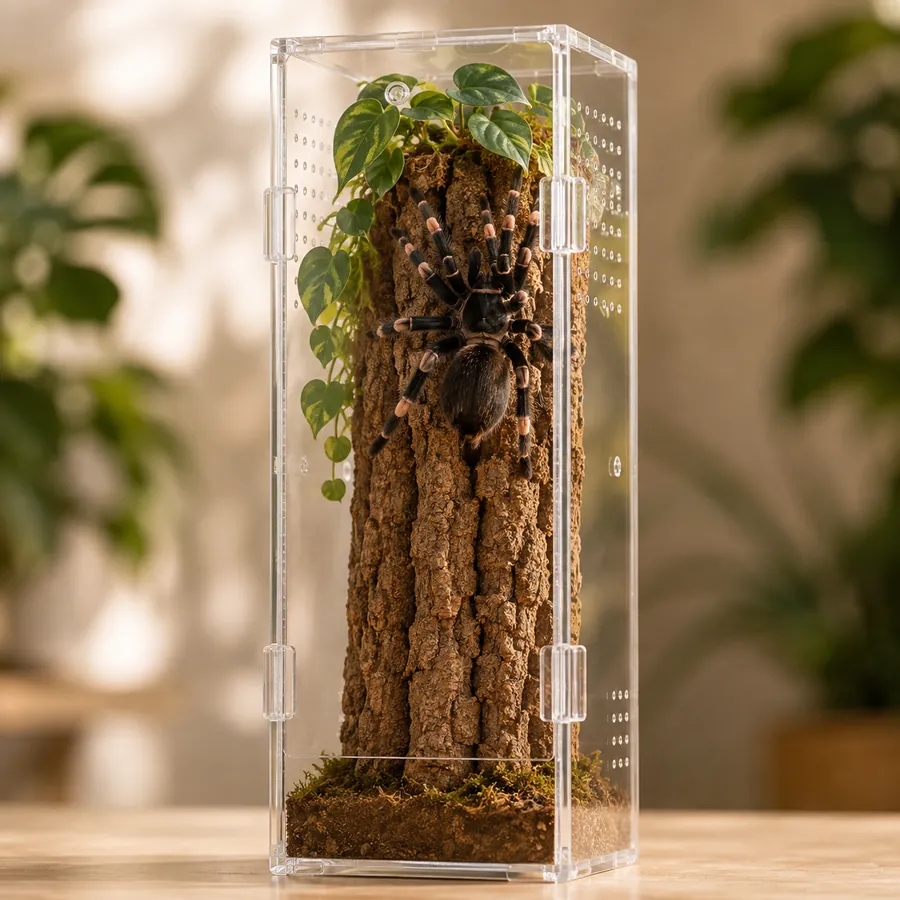
Height is where a pink toe lives. A tall enclosure lets it climb, stretch a web retreat near the top, and behave the way it would in a tree. Put the same spider in a short, wide box and you frustrate its natural behavior, and it will often web up in a corner of the lid trying to get as high as it can. Vertical space is not decoration for this species, it is the habitat.
Our arboreal tarantula enclosure is built tall for this reason. The vertical proportion is the whole point, and it is why the same range includes a wide, low option for terrestrials rather than pretending one shape fits all. For how height and substrate depth interact, the substrate guide explains why arboreals want only a thin layer.
Why ventilation matters even more
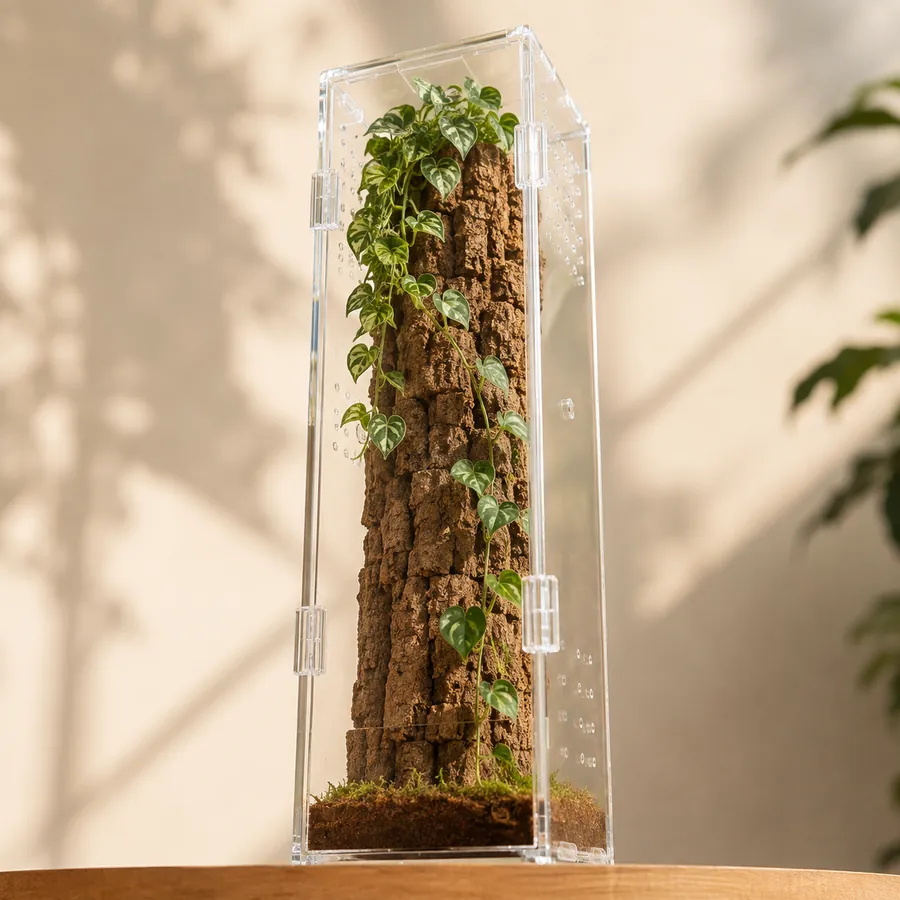
If height is the pink toe's defining need, airflow is close behind, and it is where keepers lose spiders. Avicularia have a reputation among experienced keepers for being sensitive to stagnant, overly humid air with poor ventilation. This is one of the most consistently repeated pieces of hobby knowledge about the genus.
I want to be careful and honest here. You will see people online attach dramatic percentages to Avicularia losses in stuffy enclosures. I am not going to repeat a number I cannot verify, because a trustworthy figure does not exist and this is a care guide, not a place for invented statistics. What is well established is the direction of the advice, echoed across the keeping community for years: give a pink toe generous cross-ventilation and avoid a sealed, swampy setup. That guidance is safe, widely shared, and worth following.
Cross-ventilation means vents on more than one side so air travels through the enclosure instead of sitting still. It lets you keep gentle humidity without the stale, damp pocket that arboreals handle badly. The full mechanics are in the ventilation guide, but for a pink toe the takeaway is short: err toward more airflow, and pair light humidity with plenty of air movement.
A sample pink toe setup
Here is a setup you can copy, built around a tall, well-ventilated enclosure.
| Element | What to use | Why |
|---|---|---|
| Enclosure | Tall clear acrylic with multi-side vents | Height to climb, cross-ventilation for airflow |
| Climbing surface | Vertical cork bark slab | Anchor point for the web retreat |
| Substrate | Thin coco fiber layer, lightly damp | Holds gentle humidity without raising fall distance |
| Water | Small shallow dish | Reliable moisture source |
| Optional plant | One hardy, low-light plant | Cover and a naturalistic look |
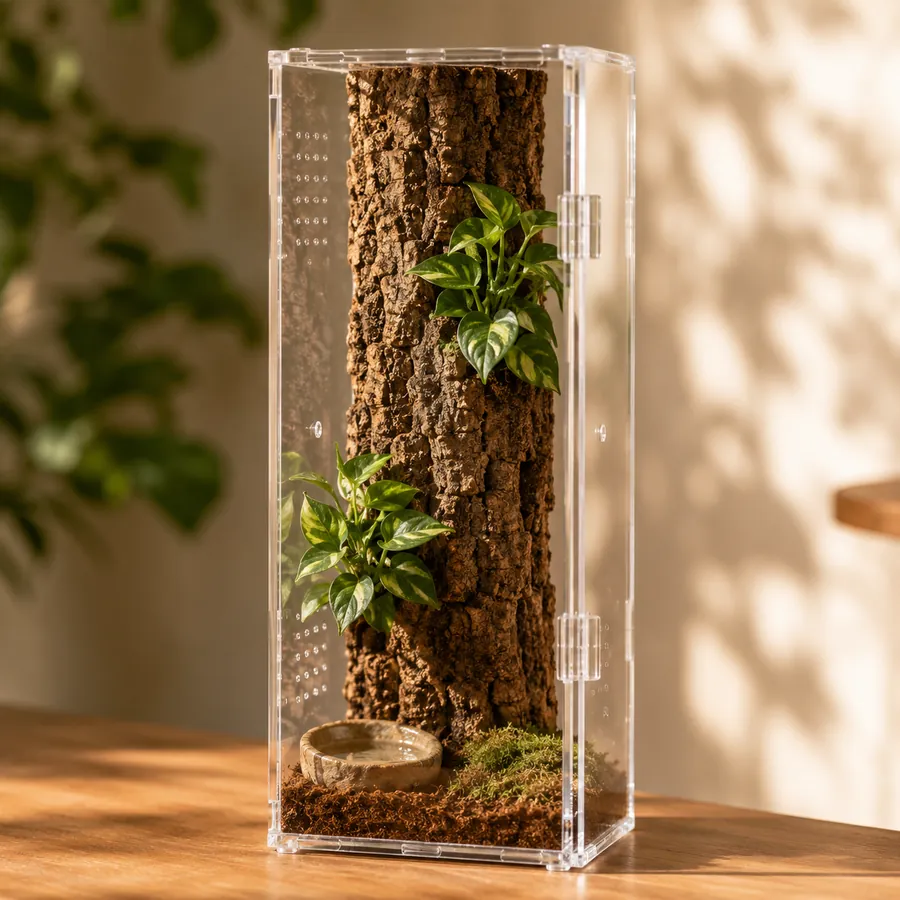
Anchor the cork bark vertically so the spider can web between it and a wall near the top. Keep the substrate thin, add a little moisture from the top rather than soaking it, and make sure the vents on multiple panels are unobstructed. That combination, height plus airflow plus a thin damp layer, is what a pink toe wants.
Pink toe pick
TaranTerra Acrylic Large Tall (6 x 6 x 10 in / 15 x 15 x 25 cm)
Vertical height, clear panels and multi-side ventilation, built for a climbing arboreal like an adult pink toe.
$59.95 $79.95 Save $20.00
From my own shelves
The pink toes I keep tell the same story every time. In a tall enclosure with a cork slab and vents on more than one side, they web up high, hunt from their retreat, and stay calm. The one time I tried a short, wide box because it was what I had spare, the spider spent days trying to climb the smooth walls and webbed the lid instead of the bark. I moved it to a tall setup the same week, and the difference in how settled it looked was immediate.
Slings and re-housing
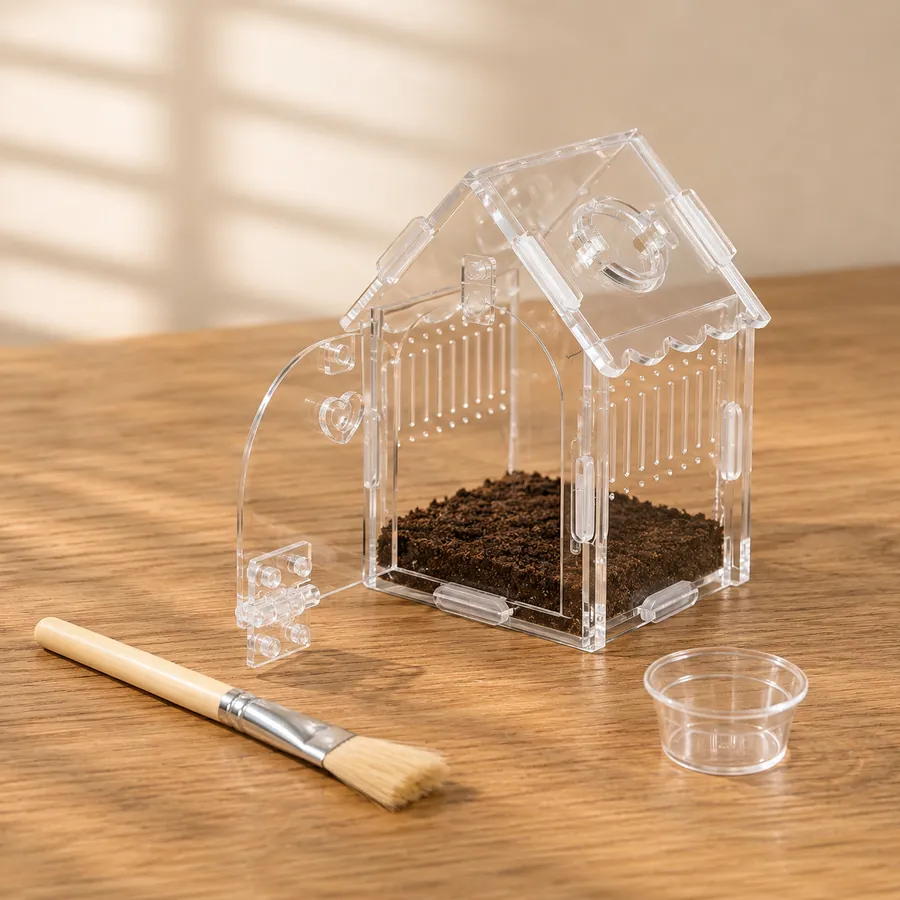
Pink toe slings still want vertical space, just in a smaller package. A compact enclosure keeps prey findable and the spider reachable, and you step up to a taller adult enclosure as it grows. Our positioning on the House models is honest here: they are sling and display enclosures for tiny or hatchling species, and you can start a young arboreal in a small home before moving to the tall adult size. See the sling enclosure and the enclosure size by stage guide for how the steps work.
Because a female pink toe can be a long-term companion, it is worth setting the adult enclosure up properly.
documented lifespan of females in some tarantula species, so a correct arboreal setup pays off for years
— Encyclopaedia Britannica, 2024
To round out the build, use the how to choose a tarantula enclosure checklist for the general criteria, and read what buyers say about our tall enclosures in the verified reviews. One honest note: this is a housing guide, not veterinary advice. For any health concern with your spider, consult a qualified exotic-animal professional.
Quick answers
How tall should a pink toe enclosure be? Taller than it is wide, with enough vertical room for the spider to climb and web above a cork slab. Prioritize height and airflow over floor area.
Do pink toes need high humidity? They want gentle humidity paired with strong ventilation, not a sealed, damp box. Airflow matters as much as moisture for this genus.
Can a pink toe live in a terrestrial enclosure? It is a poor fit. A wide, short enclosure frustrates an arboreal and leaves it webbing the lid. Use a tall enclosure instead.

Adrian Costa · Tarantula keeper, 10+ yrs
Adrian has kept tarantulas for over a decade and has raised dozens of slings to adults, including arboreal species. He builds and tests every enclosure on his own shelves before writing about it.
Free shipping · 30-day money-back guarantee · Ships in 8–10 business days