
Arboreal Tarantula Enclosure — Tall, Clear & Ventilated
🔥 Selling fast — limited stock
✓ Free shipping ✓ Dispatched in 1-2 business days ✓ 30-day money-back guarantee
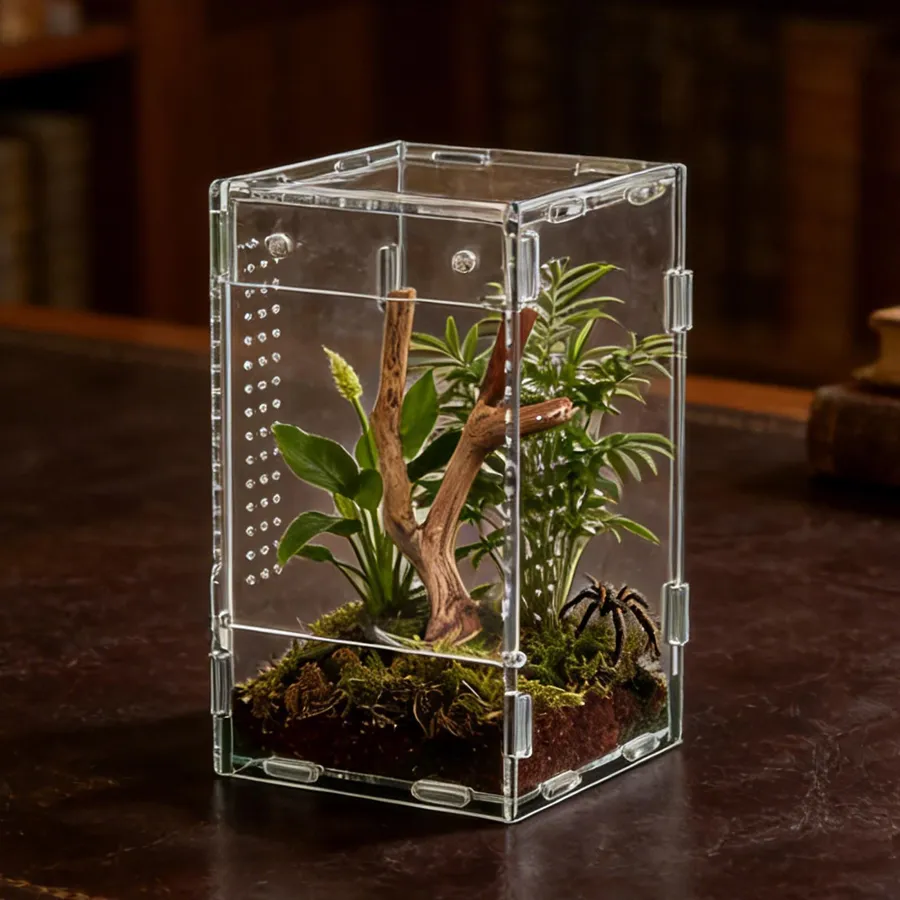
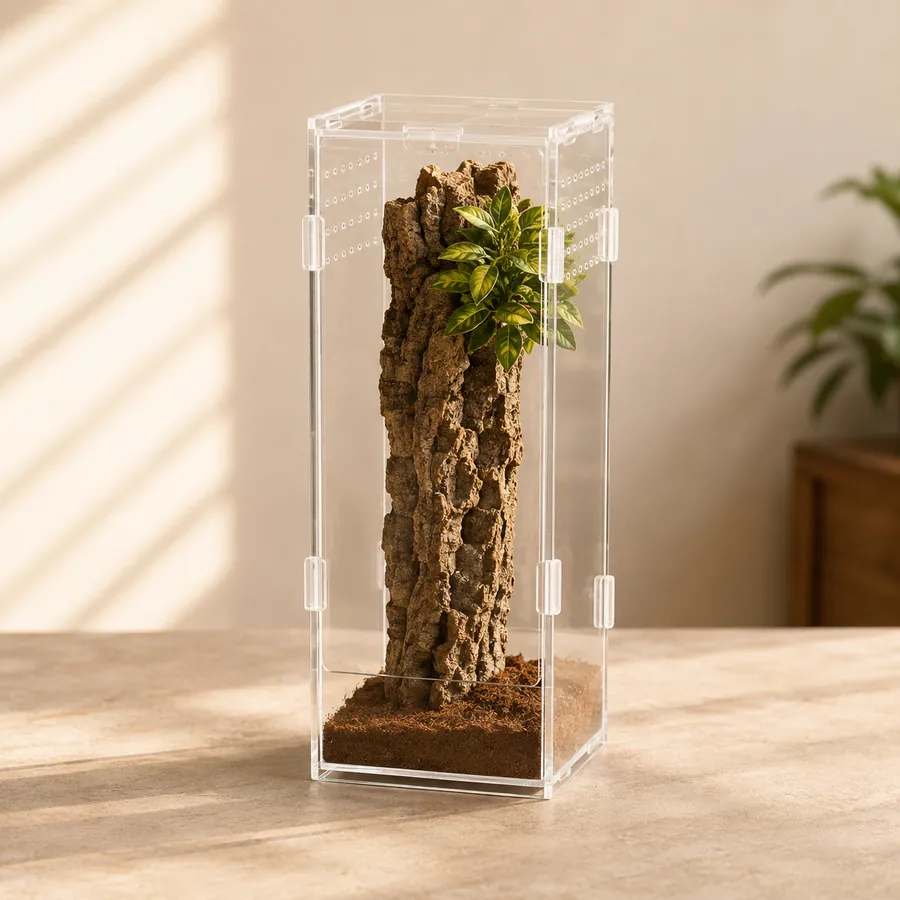
Arboreal tarantulas live up, not across
Watch a pink toe or a Psalmopoeus and you will see them spend the day near the top, tucked into a silk retreat spun against a vertical surface. That instinct is the whole difference between an arboreal and a terrestrial tarantula enclosure. A ground-dweller wants a wide, low box; a tree-dweller wants exactly the opposite. Our guide on arboreal vs terrestrial tarantulas breaks down how lifestyle should drive every setup decision, and the enclosure size guide by stage covers when to move a growing arboreal up.
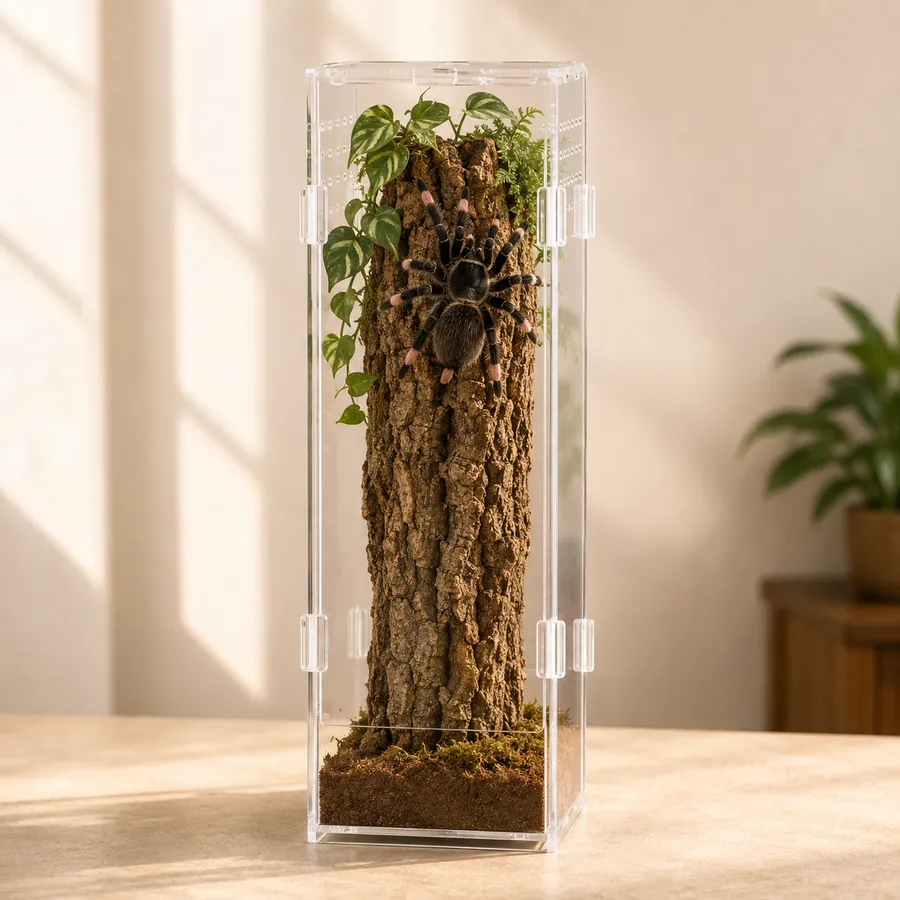
The Large Tall is built for that vertical life: 10 in (25 cm) of clear height on a compact 6×6 in (15×15 cm) base, so the spider gets room to climb and you get a tall window to watch it. Choosing between the models is genuinely about lifestyle, not price — both large sizes cost the same. If you want the full decision laid out, read how to choose a tarantula enclosure.
The list of popular arboreal species is short but well loved. Beyond the pink toe, keepers reach for the Trinidad chevron and other Psalmopoeus, the Caribena versicolor with its jewel-like colors, and the fast, striking Poecilotheria from Asia. What they all share is the same instinct to live above the substrate, anchor a silk retreat against something vertical, and patrol upward rather than across a floor. That is why the same tall footprint suits them all, even though their temperaments differ widely. As an arboreal grows, you rehouse it upward in the same way you would a ground-dweller, matching the height to the animal at each stage — our size-by-stage guide covers when to move up.
Arboreal species such as Avicularia climb and web above ground, so enclosure height and a vertical anchor matter more than floor area
— The Tarantula Keeper's Guide, Schultz & Schultz (Barron's), 2009
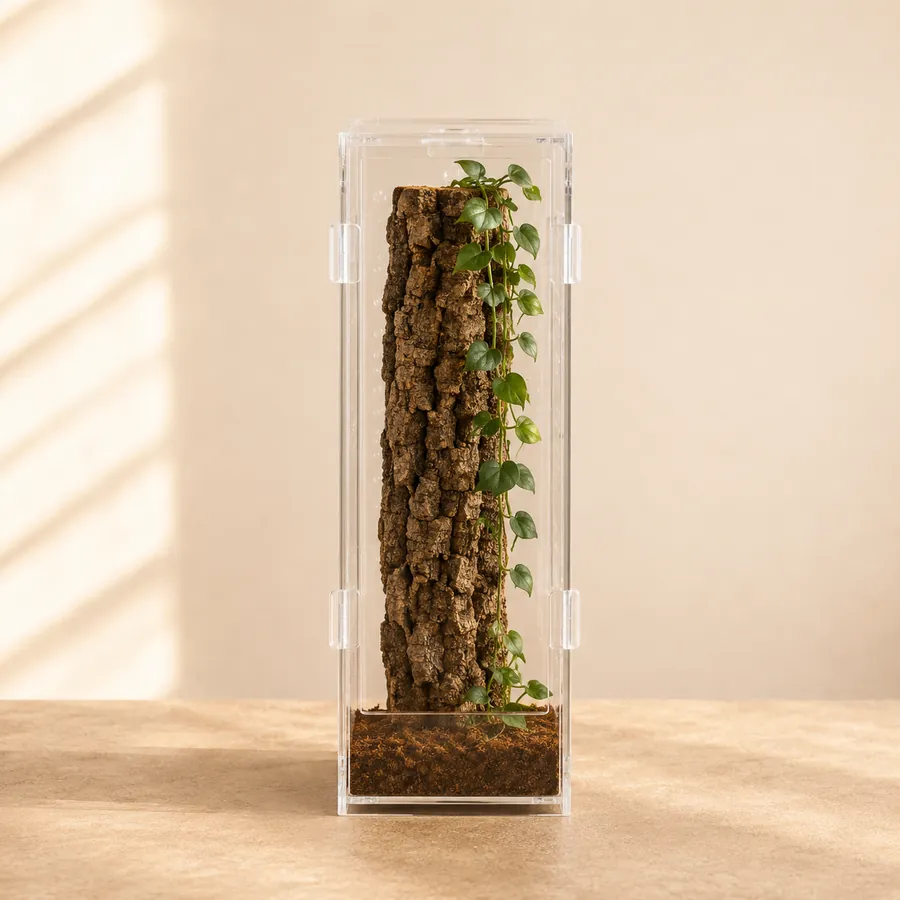
Vertical cork bark and cross-ventilation make it work
An arboreal setup is simple once you get the two essentials right. First, a piece of vertical cork bark gives the spider a surface to anchor its web tube and a shaded retreat to hide behind. Second, airflow. Tree-dwellers evolved in breezy canopy conditions, and stagnant humid air is one of the fastest ways to lose an Avicularia. The Large Tall carries ventilation rows on more than one panel, so fresh air moves across the enclosure rather than sitting still. Our ventilation guide explains how to balance airflow with the humidity an arboreal needs.
Keep the substrate shallow — a base layer is enough since an arboreal rarely burrows — and choose a mix that holds a little moisture without going swampy. Our substrate guide has the details, and if you want live cleanup you can build a light bioactive arboreal enclosure with plants climbing the cork. Mist lightly rather than flooding, and let the cross-ventilation dry the surface between sprays.
A simple setup routine works every time. Stand the cork bark slab against the back or a side panel so it reaches most of the way up, add a couple of fake or live plant sprigs near the top for cover, and leave a small water dish on the base layer. Position the enclosure out of direct sun and away from a heat vent, because arboreals want stable room temperature rather than a hot spot. Then let the spider choose where to build. Within a night or two it usually stakes out a corner near the top, spins a retreat, and settles in — a clear sign the height and airflow are working the way a tree-dweller expects.
Poor cross-ventilation and stagnant humidity are a leading husbandry mistake for arboreal Avicularia in the hobby
— British Tarantula Society husbandry guidance, 2024
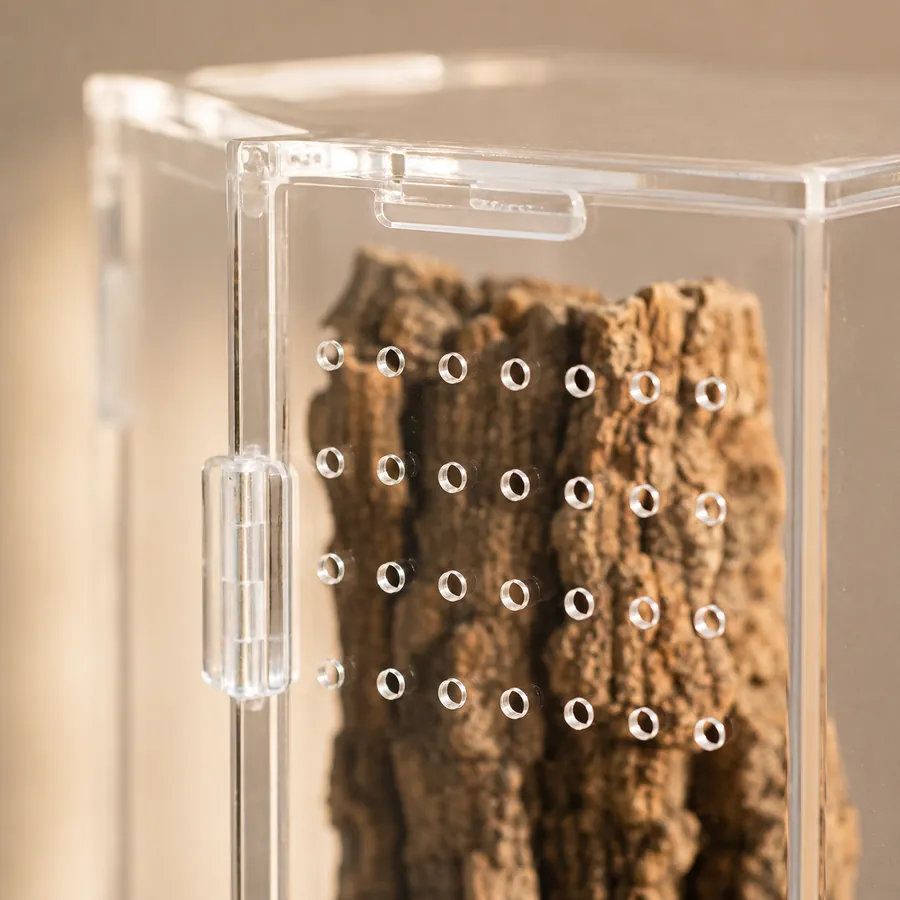
Why an acrylic tarantula enclosure beats glass and plastic
TaranTerra is built entirely from clear acrylic for a reason. Glass terrariums are heavy, fragile, and often too tall-and-narrow to configure well; storage tubs are cheap but scratch, fog, and hide your spider behind translucent walls. Acrylic sits in the sweet spot: optically clear like glass, light enough to lift with one hand, and molded with proper ventilation and a magnetic-close lid. For an arboreal tarantula enclosure, where your whole relationship with the animal is visual, that clarity is not a luxury — it is the feature.
Buyers consistently call out the same things in our verified acrylic range reviews: crystal-clear once the protective film is peeled, easy to assemble flat, and genuinely see-through on every panel. Because the acrylic panels click together without glue, you can take the enclosure apart for a deep clean and reassemble it just as easily. The same acrylic build runs across the whole TaranTerra range, from the sling House up to the two large models.
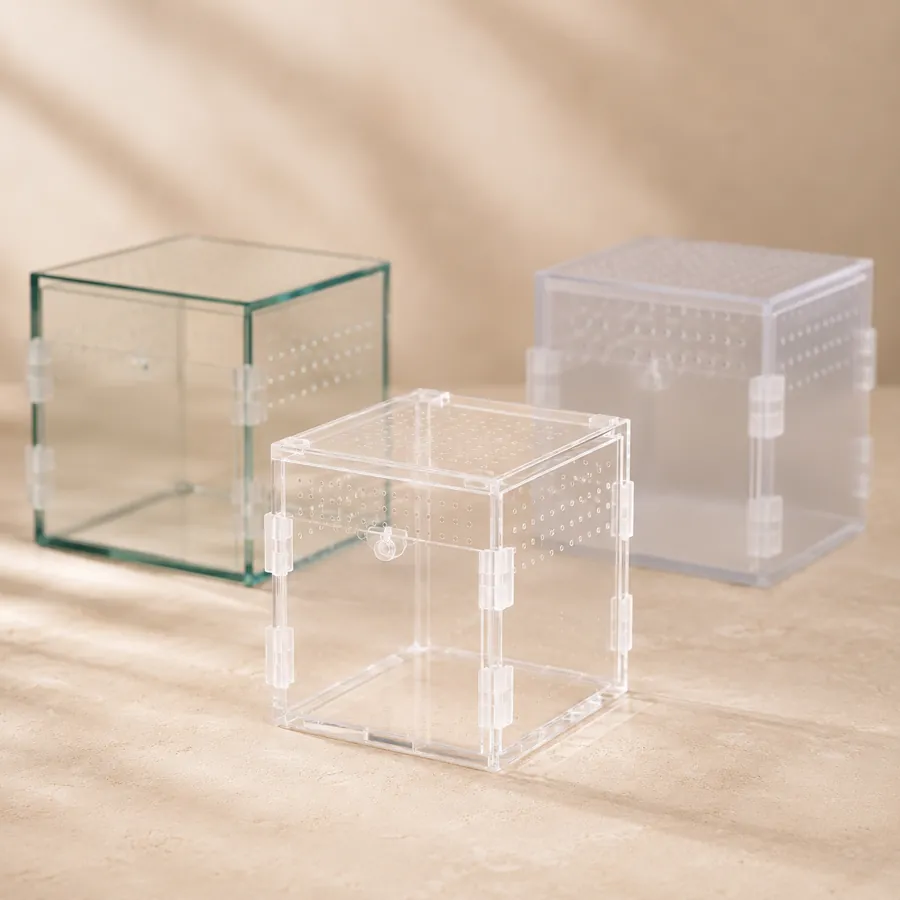
| Material | Clarity | Weight | Watching an arboreal |
|---|---|---|---|
| Acrylic (TaranTerra) | Crystal clear | Light | Excellent — see every panel |
| Glass terrarium | Clear | Heavy | Good, but bulky and fragile |
| Plastic tub | Cloudy / scratches | Light | Poor — obscured view |
Keeping a pink toe? Start here
If a pink toe is your first tree-dweller, the setup details matter more than usual because Avicularia are famously sensitive to poor ventilation. We wrote a dedicated walkthrough — read our pink toe tarantula enclosure guide for humidity, cork placement, and airflow specifics. The Large Tall is the model that guide recommends, and the live arboreal shown in the photo above is resting inside this exact enclosure.
Match the enclosure to your spider's lifestyle
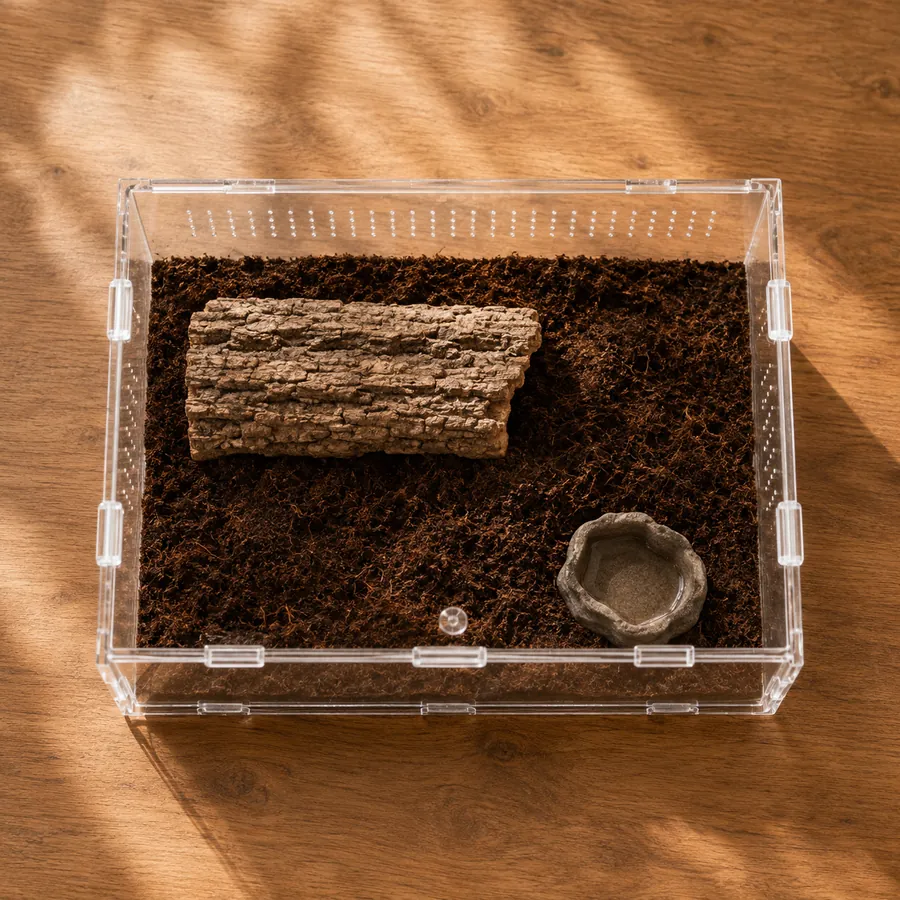
Ground-dweller instead?
Terrestrial species want floor, not height. The Large Wide 10×6×6 in (25×15×15 cm) gives a burrow and a low, fall-safe ceiling. $59.95 (was $79.95).
See the Large Wide →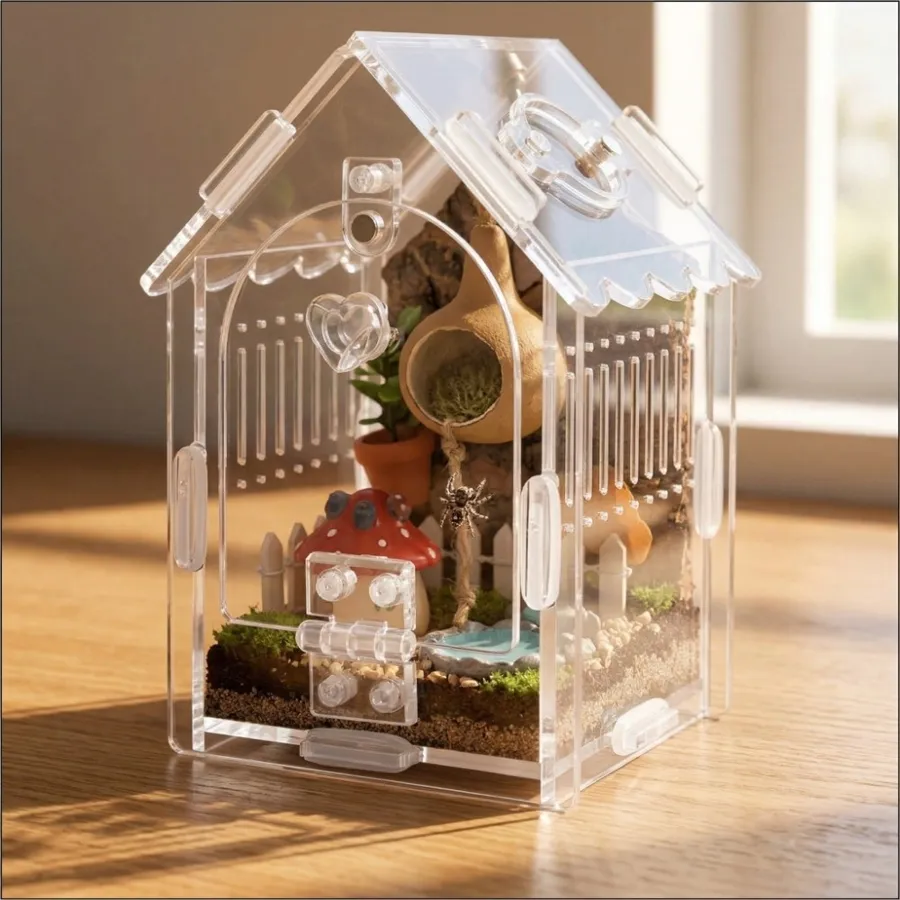
Raising a spiderling?
The TaranTerra House is a display enclosure for hatchlings or tiny species — the right size for a sling before it moves up. From $39.95.
See the sling House →"My arboreals barely touch the floor. Give them a tall enclosure, a slab of cork to web against, and real cross-ventilation, and a pink toe practically sets itself up overnight."— Adrian Costa, TaranTerra keeper, 10+ years raising slings to adults
Reviewed and updated July 2026. See how we test and read verified buyer reviews.
Arboreal enclosure questions
Which tarantulas need an arboreal enclosure?
Tree-dwelling species do. Avicularia (pink toe), Caribena, Psalmopoeus, and Poecilotheria all climb and rest above the ground, so they need vertical height and a cork bark slab to anchor a web tube. Ground-dwellers do not — they want a wide, low enclosure instead.
How tall is the Large Tall and why does height matter?
It stands 10 in (25 cm) tall on a 6×6 in (15×15 cm) base. Arboreal tarantulas live vertically, so the extra height gives room for a cork bark slab, a web tube near the top, and space to climb. Height is exactly the axis a tree-dweller uses, unlike a terrestrial that stays on the floor.
Does an arboreal enclosure need more ventilation?
Yes. Tree-dwellers like Avicularia are sensitive to stale, damp air, so cross-ventilation matters. The acrylic panels carry ventilation rows that let air move through the enclosure while the clear walls let you watch without opening it. Pair that airflow with light misting rather than a soaked substrate.
How fast does it ship and what if it is not right?
It ships flat with each panel in protective film and assembles in minutes with no tools. We dispatch in 1-2 business days and delivery takes 6-10 business days. Shipping is free and every order is covered by a 30-day money-back guarantee.
Give your tree-dweller room to climb
The Large Tall acrylic arboreal tarantula enclosure — $59.95, was $79.95. Free shipping and a 30-day money-back guarantee.
Explore the full TaranTerra range or read the acrylic range reviews.