
Terrestrial Tarantula Enclosure — Wide, Low & Safe
🔥 Selling fast — limited stock
✓ Free shipping ✓ Dispatched in 1-2 business days ✓ 30-day money-back guarantee
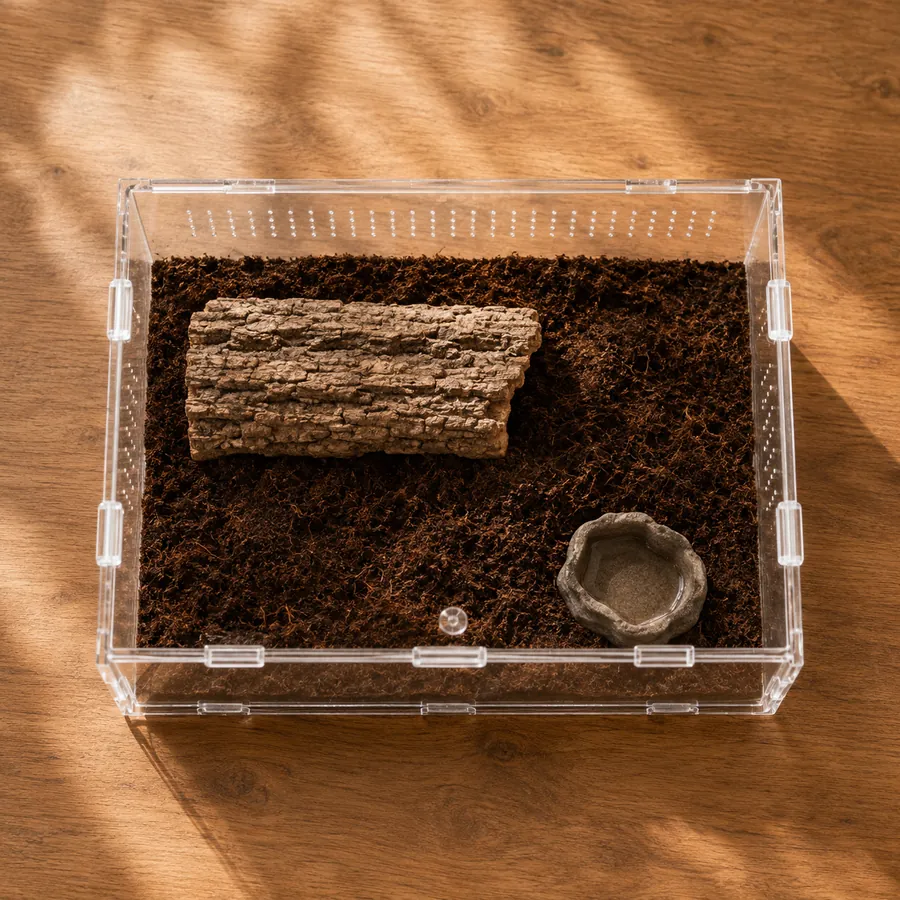
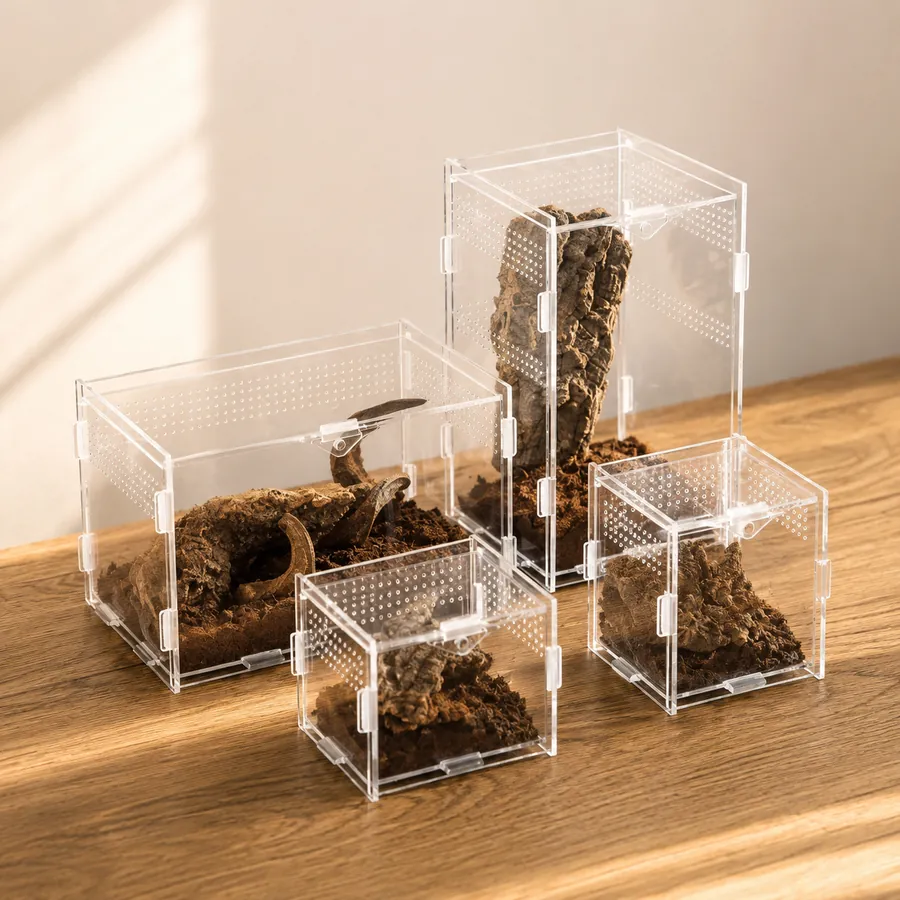
Terrestrial tarantulas need surface, not height
If you have ever watched a Chilean rose, a curly hair, or a Mexican red knee settle in, you have seen the pattern: they pick a corner, excavate, and patrol the ground. These are heavy, robust spiders built for digging, not scaling smooth vertical surfaces. That body plan is exactly why a terrestrial setup differs so much from an arboreal one. An arboreal enclosure is deliberately tall; a terrestrial enclosure is deliberately wide and low.
The danger with a tall box for a terrestrial is real and physical. A ground-dwelling tarantula that climbs the corner of a tall enclosure and lets go can land hard enough to rupture its abdomen, and that kind of fall injury is frequently fatal because the spider cannot heal a burst abdomen. Keepers and exotic-pet references have warned about this for decades, which is why experienced hobbyists match enclosure height to the animal rather than buying the tallest box on the shelf. The Large Wide is built the opposite way on purpose: a broad 10×6 in (25×15 cm) footprint with only 6 in (15 cm) of headroom, most of which you fill with substrate.
Falls that rupture a terrestrial tarantula's abdomen are frequently fatal, which is why keepers cap enclosure height for ground-dwellers
— The Tarantula Keeper's Guide, Schultz & Schultz (Barron's), 2009
Floor space also lowers stress. A cramped terrestrial paces and refuses food; give it room to walk and dig a proper burrow and it behaves naturally. If you are still weighing sizes for the life stage in front of you, our enclosure size guide by stage walks sling to adult, and our how to choose a tarantula enclosure guide covers the full decision honestly.
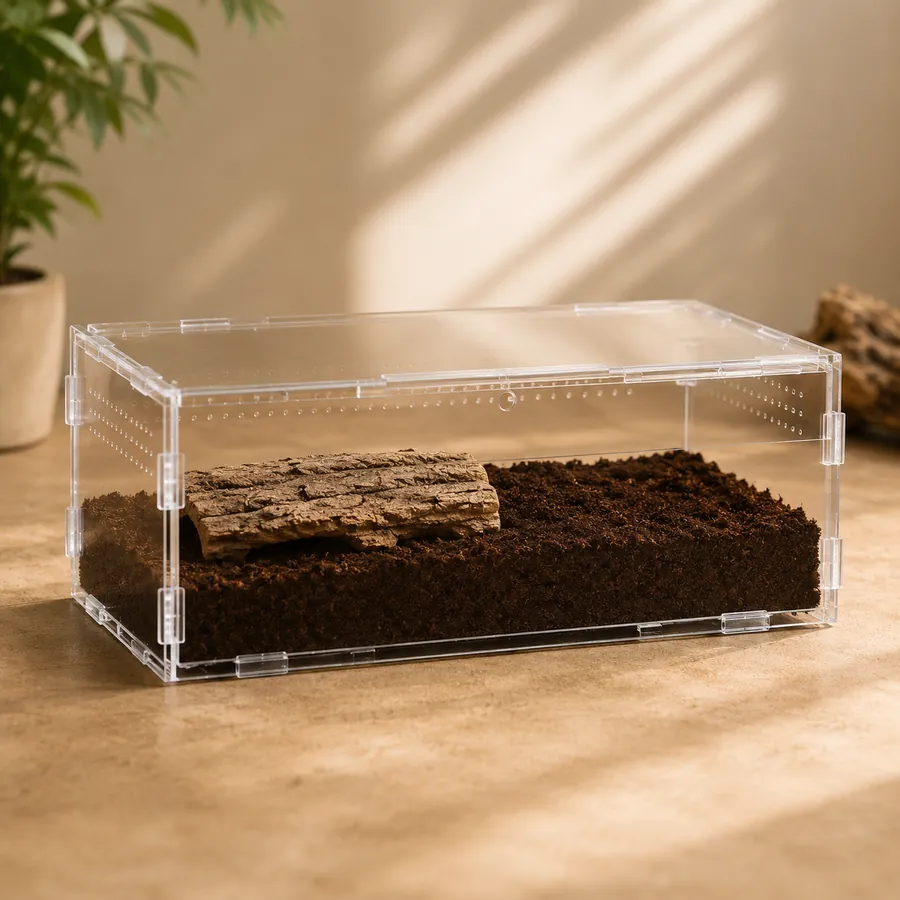
Deep substrate is the other half of a terrestrial setup
A terrestrial enclosure is only as good as what you put in it. A coco-fiber and topsoil blend, tamped down firm, holds the shape of a burrow instead of collapsing every time the spider moves. Our tarantula substrate guide covers the exact mix, depth by species, and how damp is too damp. The Large Wide's low profile is designed around this: because you bank the substrate up, the actual gap a spider could fall through is smaller than the 6 in (15 cm) wall suggests.
Deep substrate is also the foundation for a planted or bioactive tarantula enclosure if you want live springtails and plants doing the cleanup. Pair that depth with the enclosure's ventilation rows so the surface can breathe and dry between mistings — stagnant, soaked substrate is the enemy of a healthy terrestrial. Our ventilation guide explains how much airflow a ground-dwelling species actually wants.
Getting the depth right pays off in behavior you can watch. Give a burrowing species a firm, deep bed and it will excavate a proper tunnel, plug the entrance, and use it as a retreat before and during molts. That is the whole reason a wide, low enclosure and a deep substrate layer belong together: the floor gives the spider room to choose a burrow site, and the depth gives it somewhere to disappear. Add a cork flat and a shallow water dish on the surface, keep one corner slightly damp, and the Large Wide becomes a complete ground-level setup rather than an empty box. A settled terrestrial that burrows, eats, and molts on schedule is the clearest sign the enclosure shape is right.
Wide vs Tall: which acrylic enclosure fits your spider
| Feature | Large Wide 25×15×15 | Large Tall 15×15×25 |
|---|---|---|
| Best for | Terrestrial (ground-dwelling) | Arboreal (tree-dwelling) |
| Floor footprint | 9.8 × 5.9 in (25 × 15 cm) | 5.9 × 5.9 in (15 × 15 cm) |
| Usable height | 6 in (15 cm), low and fall-safe | 10 in (25 cm), tall for climbing |
| Substrate | Deep — for burrowing | Shallow — a base layer |
| Decor priority | Cork flat + hide on the ground | Vertical cork bark to climb |
| Price | $59.95 (was $79.95) | $59.95 (was $79.95) |
There is no "better" model here, only the right match. If you keep a pink toe or another tree-dweller, the Large Tall arboreal enclosure is the one to pick. For every ground-dwelling species, the Large Wide is the answer.
The mistake we see most often is buying for looks rather than lifestyle. A tall enclosure photographs well and feels generous, so a first-time keeper picks it for a ground-dwelling curly hair or rose hair and then wonders why the spider paces the walls and climbs into the danger zone near the lid. Match the shape to the animal and that problem disappears. A terrestrial in a wide, low enclosure spreads out, digs, and stays on the floor where it belongs, and you spend your time watching natural behavior instead of worrying about a fall. When in doubt, remember the simple rule: ground-dwellers get width, tree-dwellers get height, and the price is the same either way.
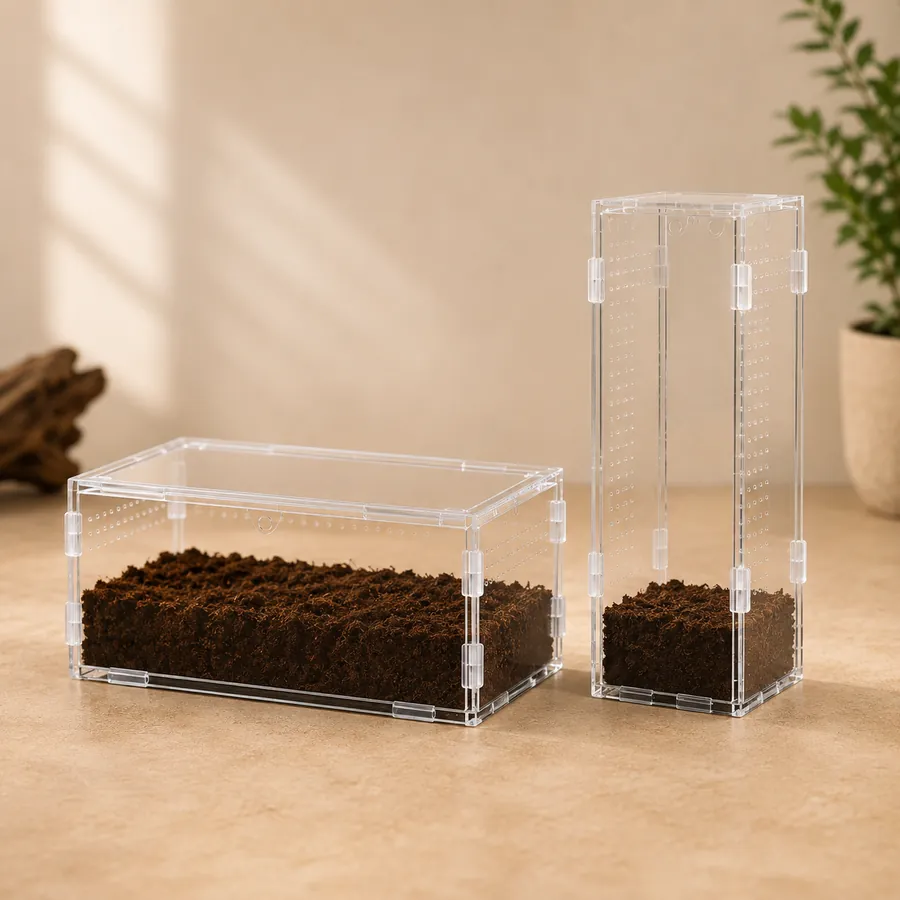
We measured the usable floor of every size
Marketing loves to quote height. For a terrestrial, the number that matters is floor area, so Adrian Costa laid all four TaranTerra acrylic sizes on the bench and worked out the ground a spider actually gets to use. The Large Wide comes out with the most floor of the whole range while keeping the lowest fall-risk ceiling of the two large models — exactly the profile a ground-dweller wants.
| Model | Floor area | Height (fall risk) |
|---|---|---|
| Small 10×10×10 | ~100 cm² (~15.5 in²) | 4 in (10 cm) — low |
| Medium 12×12×20 | ~144 cm² (~22.3 in²) | 8 in (20 cm) — tall |
| Large Tall 15×15×25 | ~225 cm² (~34.9 in²) | 10 in (25 cm) — tall |
| Large Wide 25×15×15 | ~375 cm² (~58.1 in²) | 6 in (15 cm) — low |
Floor area calculated from the panel dimensions; the Large Wide delivers the most walkable ground in the range with a deliberately short ceiling.
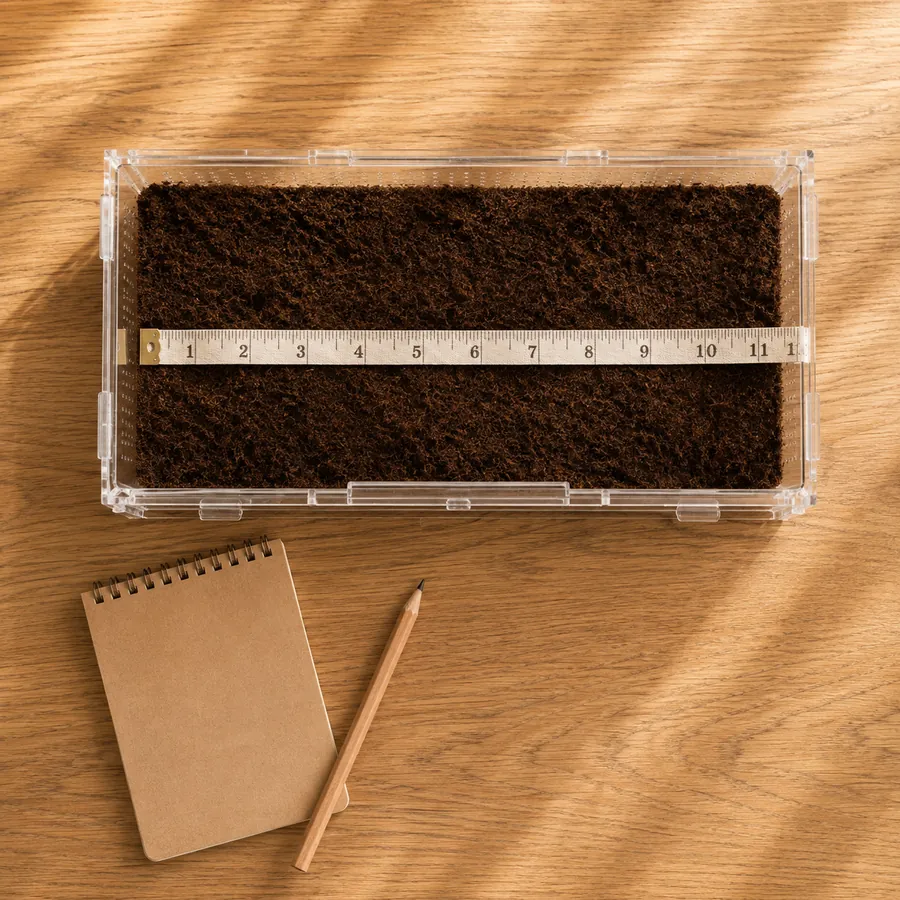
Terrestrial species get most of their security from floor space and a burrow, not from vertical room
— British Tarantula Society husbandry guidance, 2024
Match the enclosure to the age of your spider
Raising a juvenile?
The Medium 4.5×4.5×8 in (12×12×20 cm) is the right step for juveniles that have outgrown a sling box but aren't ready for an adult footprint. $44.95 (was $59.95).
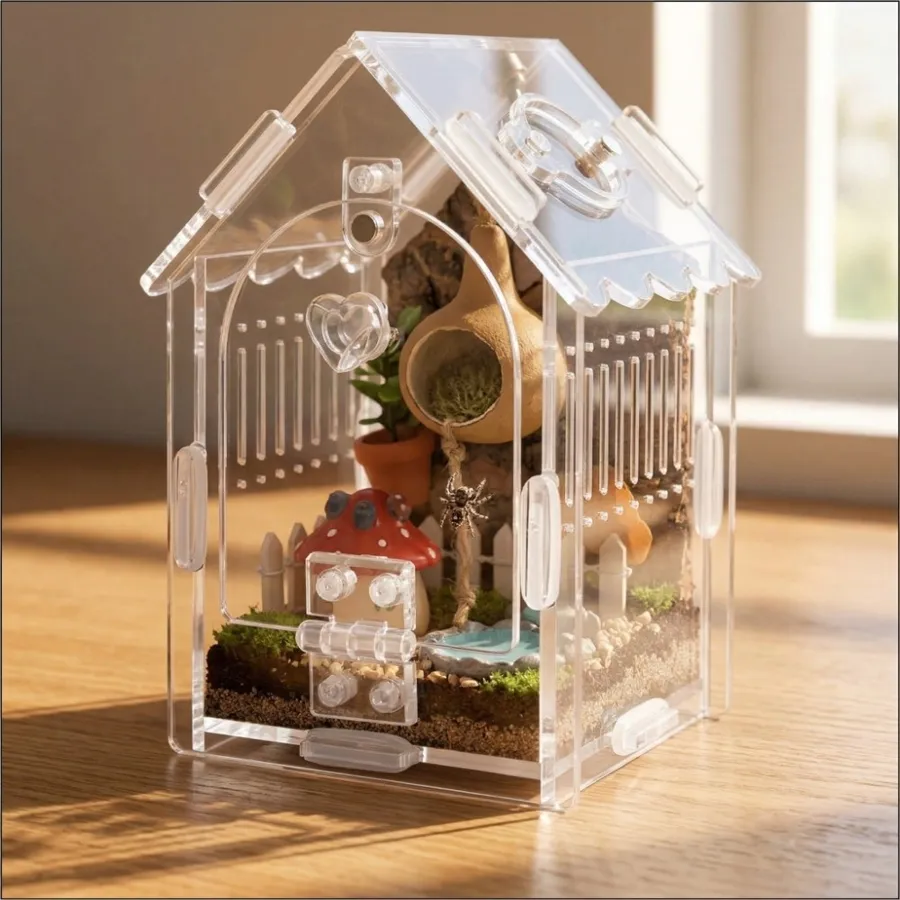
Just a sling?
The TaranTerra House is a display enclosure for hatchlings or tiny species — perfect for a sling to find its prey and molt safely. From $39.95.
See the sling House →"With a terrestrial, I set the enclosure up so the spider could fall from the lid and land on soft substrate without a scratch. Wide and low is not a style choice — it is how you keep a ground-dweller alive."— Adrian Costa, TaranTerra keeper, 10+ years raising slings to adults
Reviewed and updated July 2026. See how we test and read verified buyer reviews.
Terrestrial enclosure questions
Is the Large Wide the right size for an adult terrestrial tarantula?
Yes for most common terrestrial species kept as adults. The 10×6 in (25×15 cm) floor gives a ground-dweller room to walk, turn, and dig a burrow, while the 6 in (15 cm) height keeps any climb short. Very large species like an adult Grammostola or Brachypelma appreciate this wide footprint over a tall box.
Why is a low, wide enclosure safer for terrestrial tarantulas?
Terrestrial tarantulas are heavy-bodied and clumsy climbers. A fall from height can rupture the abdomen, which is frequently fatal. A wide, low enclosure keeps the distance between the lid and the substrate short, so a spider that climbs the corner has little to fall onto. Floor space matters far more than height.
How deep should the substrate be in this enclosure?
Fill roughly a third to half of the 6 in (15 cm) height with substrate for burrowing terrestrials, then keep the remaining headroom short on purpose. Deeper substrate also lowers the effective fall distance. See our substrate guide for a coco-fiber and topsoil mix that holds a burrow.
Does it ship assembled and how long does delivery take?
It ships flat with each acrylic panel in protective film and clicks together in minutes, no tools or glue. We dispatch in 1-2 business days and delivery takes 6-10 business days with free shipping and a 30-day money-back guarantee.
Give your ground-dweller the floor it needs
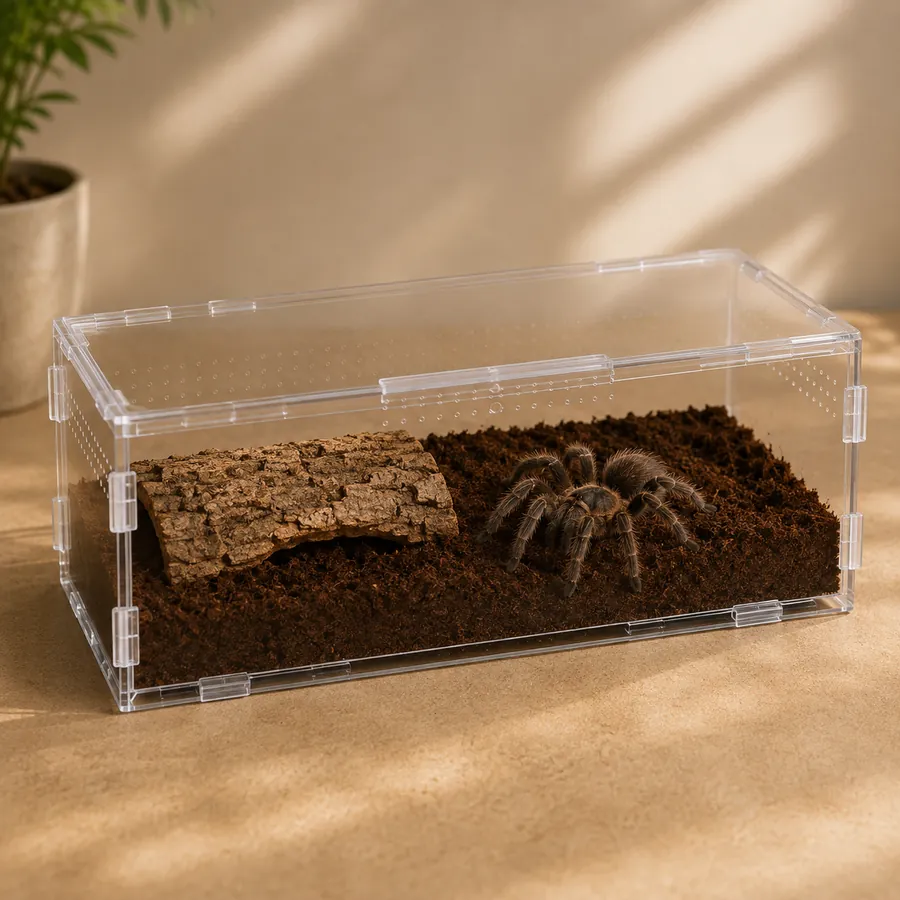
The Large Wide acrylic terrestrial tarantula enclosure — $59.95, was $79.95. Free shipping and a 30-day money-back guarantee.
Explore the full TaranTerra range or read the acrylic range reviews.