
· Adrian Costa
Tarantula substrate: choosing bedding by species and lifestyle
Substrate is the single choice new keepers get wrong most often. It is not just something to fill the bottom of the tank. It sets how much your spider can burrow, how well the enclosure holds humidity, and whether a fall from the lid ends badly. In this guide I walk through the three ingredients I actually use, how deep to make the layer for each lifestyle, and how to keep it damp without turning the floor into mud. Everything here reflects the enclosures I keep on my own shelves, so it leans practical rather than theoretical.
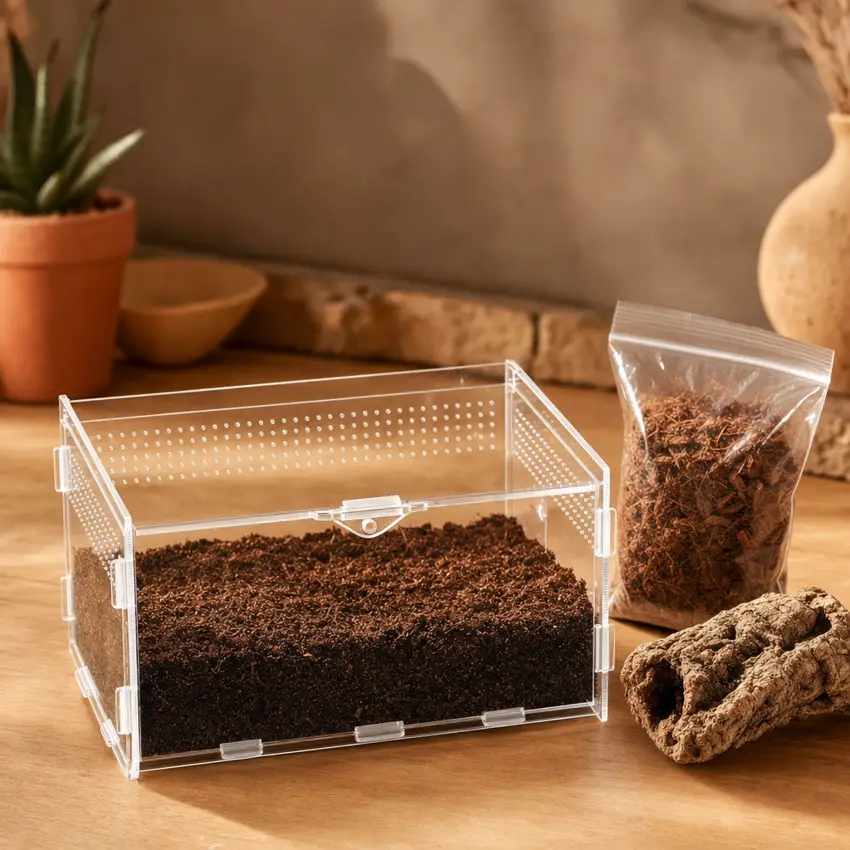
Why substrate matters more than it looks
A tarantula spends almost its entire life on the ground you give it. For burrowing species that ground is a home they excavate and reshape. For everyone else it is a landing surface and a humidity buffer. Get the depth and moisture right and the animal behaves naturally, molts on a soft bed, and rides out dry weeks in your home without stress. Get it wrong and you see a spider that paces the walls, refuses to settle, or worse takes a hard fall.
There is no single correct recipe because care needs vary widely across the family. That variety is not a small thing.
described tarantula species in the family Theraphosidae, spanning very different habitats
— World Spider Catalog, 2024
With that many species living everywhere from South American rainforest to dry North American scrub, copying one keeper's mix blindly is risky. What stays constant is the logic: read the animal's natural habitat, then choose ingredients and depth that echo it. If you are still deciding which spider fits your setup, our overview of arboreal vs terrestrial tarantulas is the fastest way to sort the two broad groups.
The three ingredients worth using
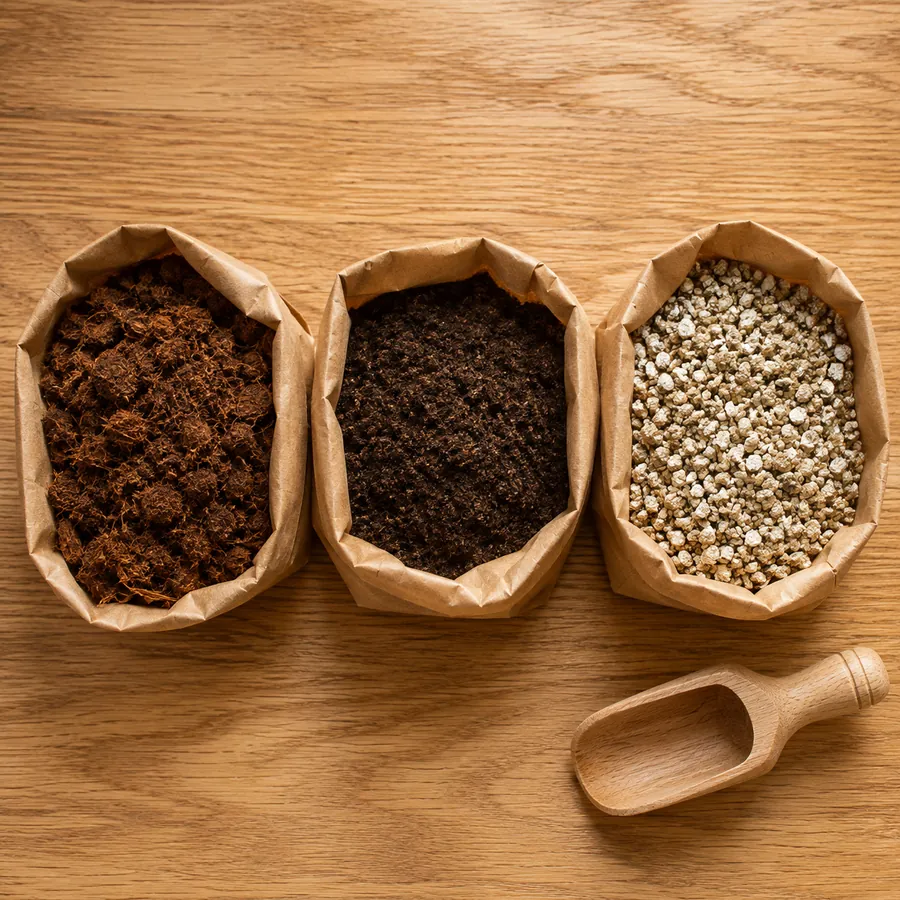
You do not need a specialty shop. Three affordable, widely available materials cover almost every terrestrial and arboreal setup.
| Ingredient | What it does | Watch out for |
|---|---|---|
| Coconut fiber (coir) | Holds moisture evenly, resists mold, packs into stable burrows | Rinse very salty bricks; buy plain, unfertilized coir |
| Topsoil (pesticide-free) | Adds structure and lets burrows keep their shape | Never use bags with added fertilizer or wetting agents |
| Vermiculite | Boosts water retention in humidity-loving setups | Use sparingly; too much stays soggy and encourages mold |
My everyday mix for terrestrial spiders is roughly two parts coco fiber to one part plain topsoil, with a small handful of vermiculite folded in only when I am keeping a species that wants steady humidity. Coco fiber does most of the work. It is cheap, it packs down into burrows that hold their walls, and unlike peat it does not turn to dust when it dries out. The topsoil that matters is the boring kind: no fertilizer, no moisture crystals, no added anything. Read the bag. The single most important rule with substrate is that whatever you add must be free of pesticides and plant food, because a tarantula sits in this material around the clock.
Depth by lifestyle
Depth is where lifestyle takes over from ingredients. This is the part people skip, and it is the part that changes the animal's welfare the most.
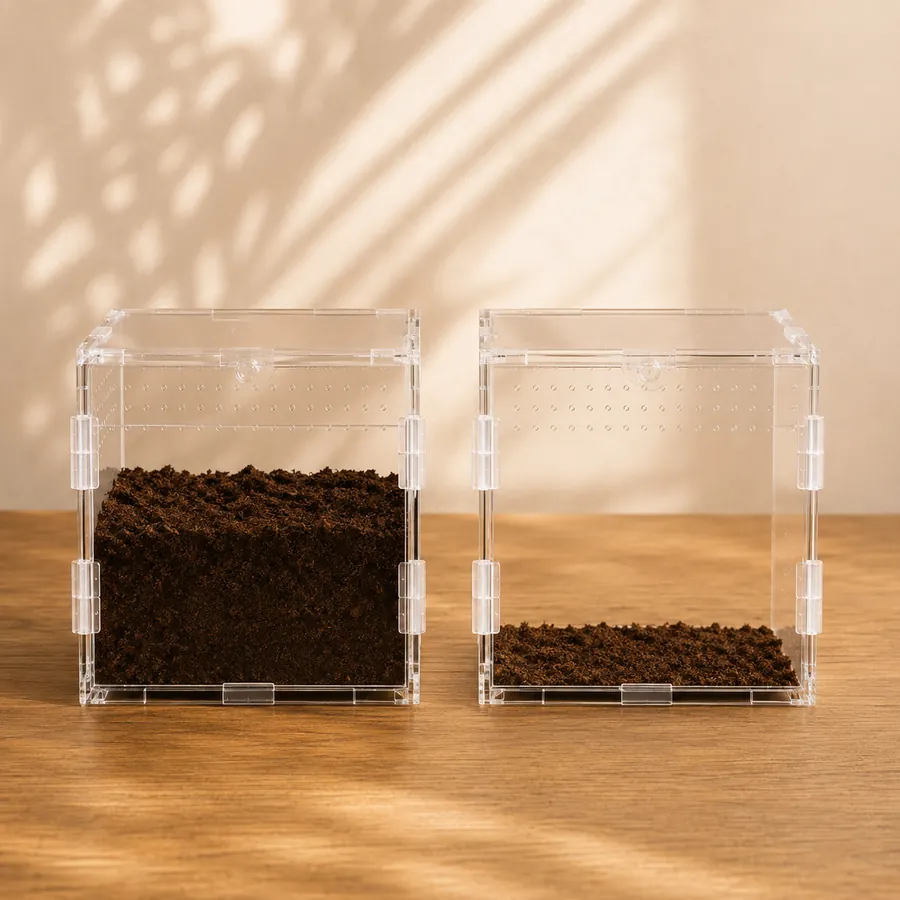
Terrestrial and burrowing species. Give them room to dig. A deep layer lets a fossorial spider build the burrow it would use in the wild, which is where it feels safe, molts, and waits out dry spells. This is exactly why a wider floor plan beats a tall box for these animals. A ground-dwelling adult belongs in something like our terrestrial tarantula enclosure, which trades height for floor area so you can pile substrate deep without creating a dangerous drop.
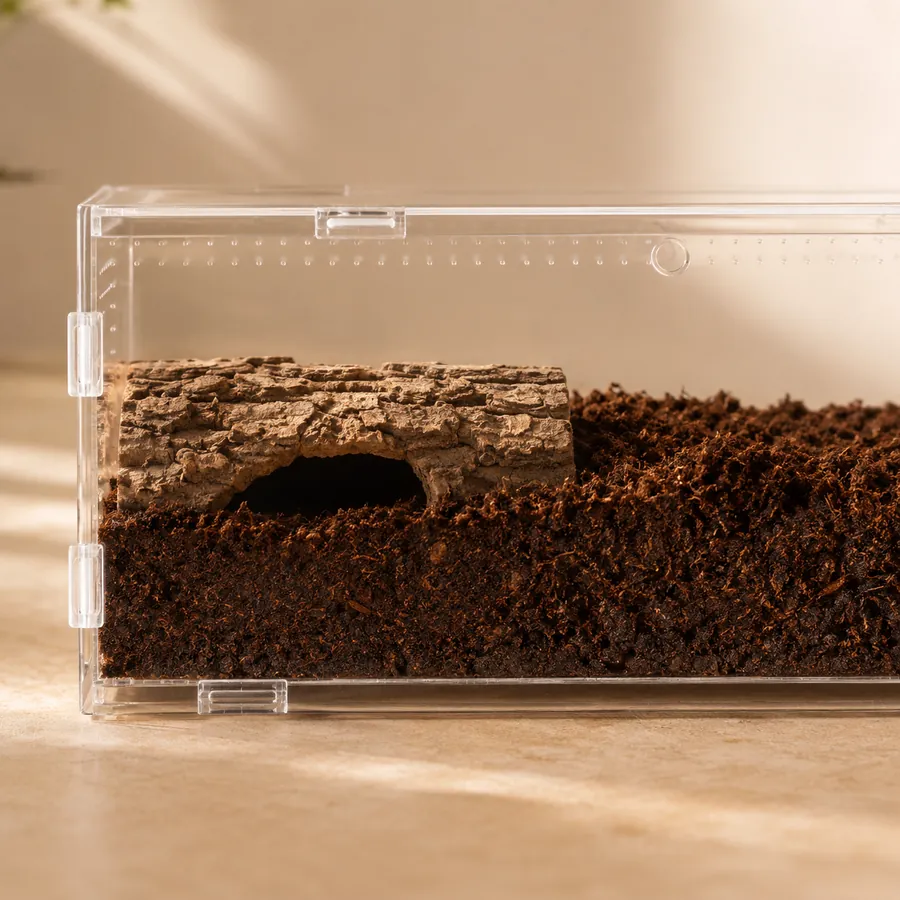
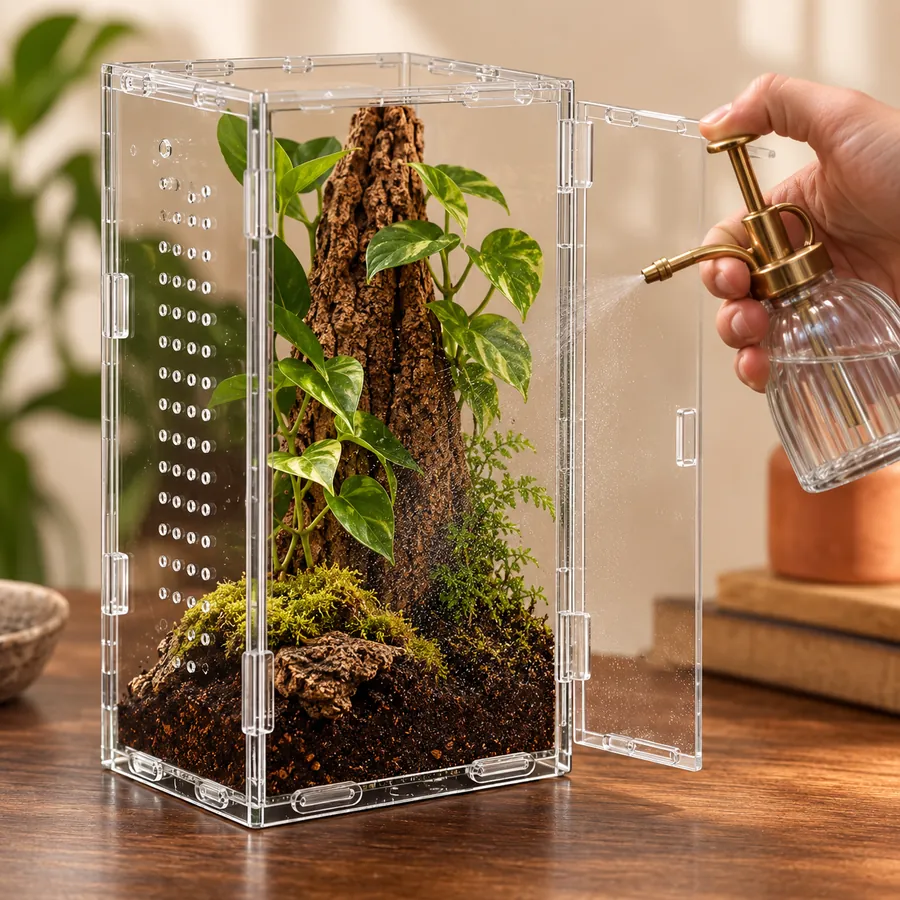
Arboreal species. Keep the layer thin, an inch or two, enough to hold a little moisture and anchor a cork bark slab. These spiders live vertically, so the enclosure should give them height and climbing surfaces, not a deep floor. Our arboreal tarantula enclosure is built around that idea, and the reason height matters for tree-dwellers is covered in the pink toe tarantula setup guide.
Slings. Tiny spiderlings still burrow, and in a small footprint they can dig proportionally deep. A compact sling home keeps them in reach of their prey and easy to check. That positioning is the whole point of our dedicated sling enclosure. For how these sizes step up over a spider's life, see the full enclosure size by stage guide.
Deep-substrate pick
TaranTerra Acrylic Large Wide (10 x 6 x 6 in / 25 x 15 x 15 cm)
More floor than height, so a terrestrial or burrowing adult can dig a proper burrow without a risky drop from the lid.
$59.95 $79.95 Save $20.00
Moisture without a swamp
Damp is good. Wet is not. Most keeper problems with mold, mites, and stressed spiders trace back to substrate that is too wet with nowhere for the moisture to leave. The target for humidity-loving species is lightly damp, like a wrung-out sponge, with the surface drying between top-ups. Dry-habitat species want mostly dry substrate with a water dish and only an occasional damp corner.
Moisture and airflow are two halves of one system. If you pour water in but the air never moves, you get stagnant, moldy conditions instead of healthy humidity. That balance is worth understanding before you overthink your mix, so read the ventilation guide alongside this one. The short version: cross-ventilation lets damp substrate breathe, which is why perforated acrylic panels beat a sealed plastic tub for most setups.
Tarantulas are a long commitment, which is another reason to build the base correctly the first time rather than fighting a soggy floor for years.
documented lifespan of females in some tarantula species, so the habitat you set up is a long-term one
— Encyclopaedia Britannica, 2024
From my own shelves
Across the enclosures I keep at home, packed coco fiber held burrow shape the best and stayed the most predictable week to week. The mixes I loaded with extra vermiculite looked fine on day one but stayed damp near the base far longer, especially in enclosures with weaker airflow. My rule now is simple: build the substrate a little drier than you think, add moisture from the top, and let ventilation carry the rest. It is easier to dampen a dry corner than to dry out a swamp.
Common substrate mistakes
A few errors show up again and again in messages I get from new keepers.
| Mistake | Why it is a problem | Fix |
|---|---|---|
| Fertilized potting soil | Added chemicals sit against the spider all day | Use only plain, pesticide-free topsoil or coir |
| Deep substrate under an arboreal | Raises the fall distance from a tall lid | Thin layer for tree-dwellers, height comes from bark |
| Shallow substrate for a burrower | The spider cannot build a secure burrow | Go as deep as the leg span or more |
| Constantly soaking the floor | Mold, mites, and stressed spiders | Lightly damp, dry between top-ups, add airflow |
None of this is complicated once you stop thinking about a generic recipe and start thinking about how your particular spider lives. If you are choosing an enclosure to pair with your substrate plan, the how to choose a tarantula enclosure checklist covers ventilation, access, and secure lids in one place, and you can see how our own enclosures hold up in the verified reviews from buyers. We explain our own hands-on approach on the how we test page.
Quick answers
Can I use sand for a tarantula? Pure sand is a poor choice for almost every species. It does not hold burrow shape and dries out fast. A coco fiber and topsoil base is far better, even for dry-habitat spiders.
How often do I replace substrate? Spot-clean regularly and do a full change when it smells off, grows mold you cannot remove, or after a pest issue. There is no fixed calendar; judge by condition.
Do slings need the same mix as adults? The same ingredients work. Slings just need less of it in a smaller footprint, kept slightly damp so they do not dehydrate.

Adrian Costa · Tarantula keeper, 10+ yrs
Adrian has kept tarantulas for over a decade and has raised dozens of slings to adults. He builds and tests every enclosure on his own shelves before writing about it.
Free shipping · 30-day money-back guarantee · Ships in 8–10 business days