
· Adrian Costa
How to clean a tarantula enclosure without stressing your spider
Cleaning is the part of tarantula keeping new owners quietly dread, usually because they picture the aquarium version: draining, scrubbing, a full teardown every few weeks. A tarantula enclosure is nothing like that. These are dry, tidy, low-waste animals, and almost all of your maintenance is a short pickup through the front door. What follows is the routine I use on my own shelves.
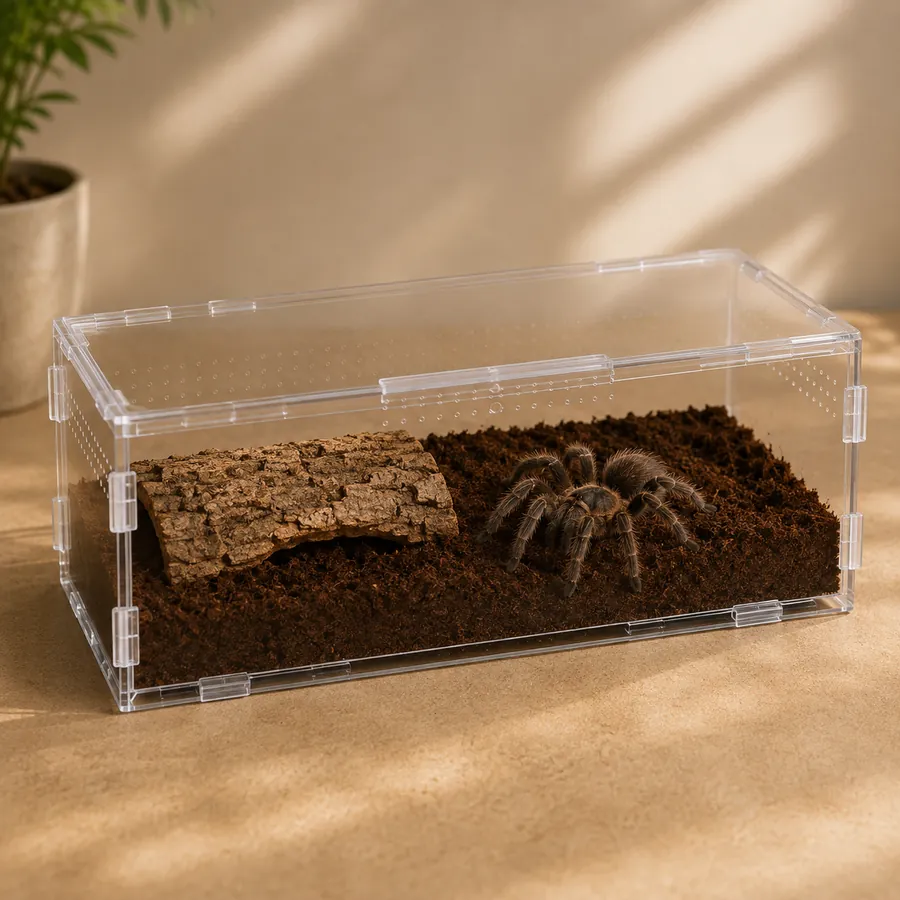
Two tiers, not one big clean
Split cleaning into two jobs with almost nothing in common, and the task stops feeling heavy.
The spot-clean is the routine one. You remove what the spider has finished with: the dried husk of a cricket, a bolus, the odd dropping on a clear panel. The spider usually does not move, and it is the single habit that keeps an enclosure fresh for months at a stretch.
The full substrate change is the rare one. You take everything out, replace the bedding, rinse the enclosure, and set it back up. Done correctly this is an occasional event, not a monthly chore.
The mistake worth avoiding is treating the second job as a schedule. Keepers who put a teardown on the calendar destroy burrows and webbing a spider spent weeks building, for a floor that was already clean. Condition decides, not the date, and no single answer fits every spider.
described tarantula species, spanning humid rainforest to dry scrub, so no single cleaning calendar fits them all
— World Spider Catalog, 2024
A humid rainforest setup and a dry scrub setup foul at completely different rates, so read your own enclosure rather than copying a number from a forum. Our tarantula substrate guide covers the mix and depth that make maintenance easy in the first place.
The spot-clean, step by step
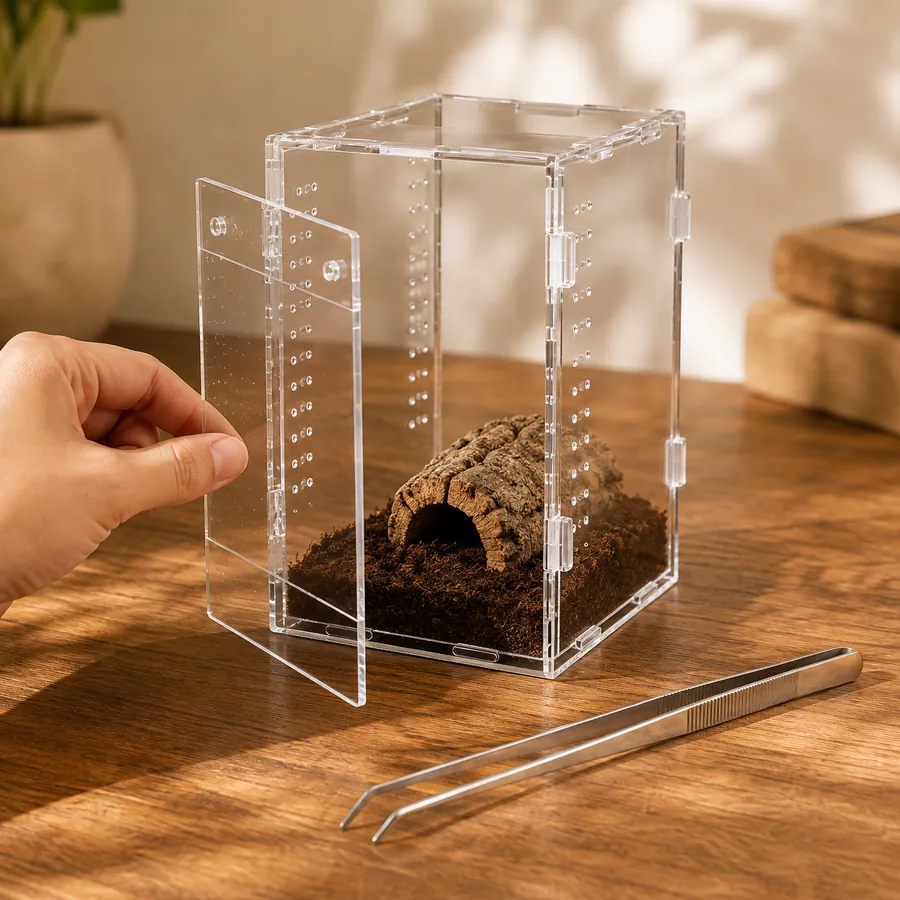
This is the routine that does almost all of the work. Fold it into your normal feeding check so you open the enclosure once.
- Look before you open. Find the spider and note where it is sitting. If it is inside its burrow or tucked under bark, you can work the open areas without it ever registering you.
- Open at the spider's level. Use the front door rather than the roof, so nothing passes over the animal.
- Lift the leftovers. Long tweezers pick up uneaten prey, boluses and shed skin cleanly. A bolus is the small compacted ball left after a meal, and it is the main thing you are hunting for.
- Check the water dish. Tip it out, wipe it, refill. A dish left to go stale causes more trouble than the substrate does.
- Wipe the panels. A clean damp cloth clears the smears and water spots that build up at the front.
- Close and check the seal. Confirm the door is shut and the seams are seated before you walk away.
Leave the webbing alone. Silk is not dirt. A terrestrial spider webs a mat around its retreat and an arboreal builds a tube it lives inside, and pulling that out because it looks untidy takes away structure the animal has invested in. Remove waste, not architecture. The same goes for the cork bark and hides in our tarantula enclosure decor guide: rinse them if they foul, but do not rearrange the furniture every visit.
Working around a live tarantula
Everything above assumes the spider stays in the enclosure while you work, which is the normal case. A few rules keep it that way, and they protect the animal first.
Handling is the risk people underestimate. A tarantula carries its whole body weight on a thin abdomen wall, so a drop can be fatal even though the animal looks robust. No cleaning task requires you to pick one up, so do not create the situation.
Many New World species also flick urticating hairs from the abdomen when threatened. These irritate skin and are far worse in eyes, so work calmly, keep your face away from an open enclosure, and wash your hands and forearms afterwards.
Never clean around a molting spider. A tarantula that has flipped onto its back is molting, not dying, and it is at its most fragile then and for days afterwards while the new exoskeleton hardens. Close the enclosure and leave it alone. The same goes for a spider in premolt that has sealed itself in and stopped eating. Waste can wait; a disturbed molt cannot be undone.
What to use, and what never goes in
The shortlist is genuinely short, and the exclusions matter more than the inclusions.
| Use | For | Never use |
|---|---|---|
| Long tweezers or feeding tongs | Lifting prey remains, boluses and shed skin | Bare fingers near the spider |
| Plain warm water | Rinsing the enclosure and decor at a full change | Soap, washing-up liquid, bleach |
| A clean damp cloth | Wiping panels and the water dish | Scented or antibacterial wipes |
| A dedicated soft brush | Loosening dried residue on empty decor | Anything also used for household cleaning |
Tarantulas are invertebrates, and detergent or disinfectant residue does not belong near them. There is no safe dilution to aim for, so keep chemicals out entirely and let hot water and scrubbing do the work. This is why a dedicated brush matters: a sponge that has met dish soap keeps traces of it. Wipe acrylic panels with a soft cloth rather than an abrasive pad, because scratches are permanent.
Easiest to maintain
TaranTerra Acrylic Large Wide (10 x 6 x 6 in / 25 x 15 x 15 cm)
A magnetic front door opens at the spider's level for spot-cleaning, and the clear panels let you inspect the floor without opening anything at all.
$59.95 $79.95 Save $20.00
When a full substrate change is due
Judge the floor by condition. These are the signals that a full change has earned itself:
- A persistent sour or ammonia smell that does not clear after a spot-clean.
- Mold spreading across the surface faster than you can remove the patches.
- A visible mite or fungus gnat population that keeps rebounding.
- Substrate that stays soaked days after you stopped adding water.
- Substrate broken down to a fine, compacted paste that no longer holds a burrow.
Notice that four of the five trace back to moisture rather than to waste. Damp is good and wet is not, and the fastest route to a stinking enclosure is a floor that never gets a chance to dry. Airflow is half of that equation, which is why the tarantula enclosure ventilation guide pairs with this one. An enclosure that breathes needs full changes far less often.
If none of those signals is present, leave it. A settled enclosure with an intact burrow is a good enclosure. Bear in mind how long this routine runs for.
documented lifespan of females in some tarantula species, so the routine you set now is one you will repeat for a very long time
— Encyclopaedia Britannica, 2024
Doing a full change calmly
When a change is due, plan it as a short, quiet operation rather than an afternoon project.
Prepare first. Fresh substrate mixed and lightly dampened, decor rinsed and dried, a catch cup with a lid, and the new layout mapped out in your head. The less time the enclosure sits open, the better this goes.
Move the spider without touching it. The catch cup method is the standard: place a clear cup over the spider, slide a stiff card underneath, lift the whole assembly, and set it down somewhere secure with the lid on. You are guiding the animal, never gripping it. If your tarantula is deep in a burrow and will not come out, postpone rather than dig it out.
Strip, rinse, rebuild. Empty the old substrate, rinse the enclosure and decor with hot water only, dry everything completely, then rebuild the layout before the spider comes back. Keep the new setup close to the old one: same hide, roughly the same place. A spider returned to a familiar-looking floor settles far quicker than one dropped into a redesigned room.
Return and leave alone. Tip the cup gently at substrate level, let the spider walk out in its own time, close the door, and leave it be. Rebuilding a burrow takes days, and a spider doing that work does not want an audience. Ground-dwellers feel a change most, because you have just removed a burrow they dug themselves, which is another argument for the deep substrate and wide floor our terrestrial tarantula enclosure is built around.
Mold, mites and other warning signs
Most cleaning emergencies announce themselves early.
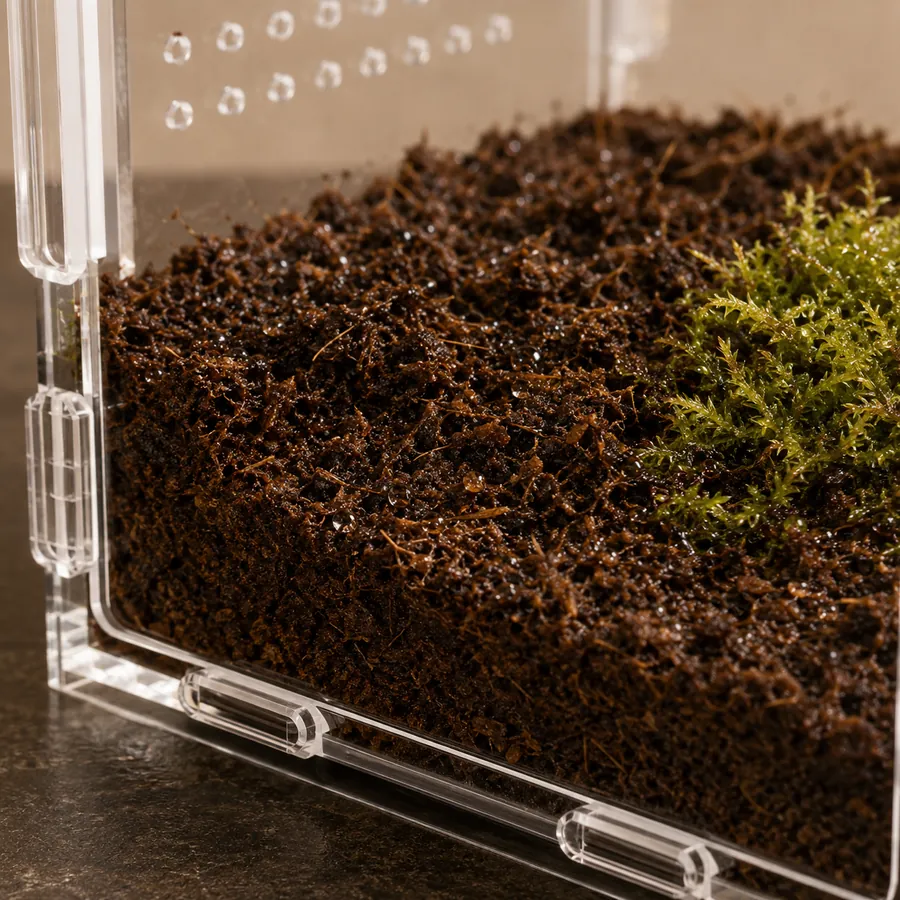
Mold usually starts on something organic you missed: an uneaten cricket in a corner, a piece of bark on permanently wet substrate. Remove the source and the patch, improve airflow, and let the surface dry between top-ups. Mold that keeps returning across the whole floor is telling you the enclosure is too wet, not that you need a stronger cleaner.
Mites appear as tiny pale specks around leftover food or the water dish. A small population in damp substrate is normal and harmless. A bloom is a housekeeping message: prey remains are being left too long. Tighten the spot-clean, dry the floor slightly, and the numbers fall. Fungus gnats mean the same thing, and take the same fix.
A cleanup crew of springtails and isopods does this job continuously, which is the idea behind a bioactive tarantula enclosure. It suits humidity-tolerant species best and takes some weeks to settle.
From my own shelves
The single change that cut my cleaning time most was removing leftovers the day after feeding instead of at the end of the week. Almost every mold patch and mite bloom I have dealt with started with a cricket left one day too long. The enclosures I keep driest and best ventilated go longest between full changes, and the ones I fussed over most, digging out webbing because it looked messy, were the ones whose occupants took longest to settle.
Take the leftovers out promptly, keep the floor damp rather than wet, let the enclosure breathe, and reserve the full teardown for the rare occasions the substrate demands it. The how to choose a tarantula enclosure checklist covers access and airflow together, and our verified reviews show how ours hold up day to day.
Quick answers
How often should I clean a tarantula enclosure? Spot-clean as part of your normal feeding check, lifting leftovers and boluses as they appear. Full substrate changes go by condition, not by calendar: smell, spreading mold, a pest bloom or waterlogged bedding.
Can I use soap or disinfectant? No. Keep detergents, bleach and scented cleaners out entirely. Hot water, a dedicated brush and a thorough rinse and dry are all a tarantula enclosure needs.
Do I need to remove my tarantula to clean? Not for a spot-clean. Work through the front door with long tweezers while the spider stays put. Only a full substrate change calls for moving it, and then with a catch cup, never by hand.
My tarantula flipped onto its back while I was cleaning. What now? It is molting. Close the enclosure, remove nothing, and leave it undisturbed until well after the new exoskeleton has hardened.

Adrian Costa · Tarantula keeper, 10+ yrs
Adrian has kept tarantulas for over a decade and has raised dozens of slings to adults.
Free shipping · 30-day money-back guarantee · Ships in 8–10 business days